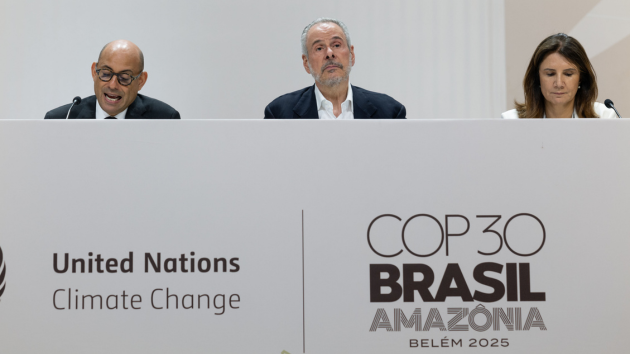
Delegates at COP30 have finally reached a deal on a closing agreement — a full day behind schedule — but the outcome has been widely criticized as falling far short of expectations.
Held in Belém, Brazil, on the edge of the Amazon rainforest, this year’s UN climate summit had opened with strong demands from more than 80 nations for a global roadmap to phase out fossil fuels, the primary driver of human-caused climate change. That proposal was ultimately left out of the final text.
The agreement also includes no new commitments to halt deforestation in the Amazon, despite the conference’s setting in a region known as the “lungs of the planet.”
Environmental groups reacted with frustration and alarm.
“The venue bursting into flames couldn’t be a more apt metaphor for COP30’s catastrophic failure to take concrete action to implement a funded and fair fossil fuel phaseout,” said Jean Su, energy justice director at the Center for Biological Diversity, referencing a fire that broke out at the summit on Thursday.
She added that talks repeatedly deadlocked because “wealthy nations profiting off polluting fossil fuels fail to offer the needed financial support to developing countries and any meaningful commitment to move first.”
COP30 President André Corrêa do Lago appeared to acknowledge the disappointment, telling delegates during the closing plenary that while the final deal lacked the roadmaps many had sought, he would exercise his authority as COP president to draft those frameworks himself.