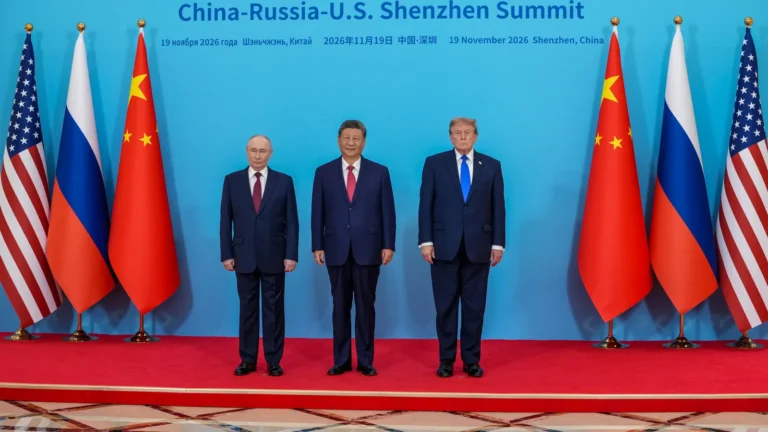
The unprecedented gathering of the three world leaders took place at Shenzhen’s Kylin Villa on the sidelines of the Asia-Pacific Economic Cooperation (APEC) summit.
The meeting lasted approximately 90 minutes, with the three leaders reaffirming their commitment to preventing nuclear conflict and declaring that a nuclear war cannot be won and must never be fought.
However, despite the historic significance of the meeting, the discussions appeared to produce more diplomatic symbolism than substantive policy breakthroughs.
Nuclear Disarmament Talks Yield Limited Progress
Ahead of the summit, Trump had expressed his desire to discuss nuclear weapons and the ongoing wars in Ukraine and Iran.
The American president has repeatedly advocated for a comprehensive nuclear arms agreement involving Washington, Beijing and Moscow, particularly following the expiration of the New START treaty between the United States and Russia earlier this year.
Although the joint declaration emphasized the importance of preventing nuclear warfare, Xi made no public commitment to limiting or reducing China’s nuclear arsenal.
The absence of specific commitments or a concrete agreement highlighted the challenges facing efforts to establish a new international nuclear arms control framework involving all three countries.
Ukraine and Iran Conflicts Addressed in Broad Terms
Trump and Putin also spoke about efforts to end the ongoing war in Ukraine, although no significant breakthrough or detailed roadmap toward peace was publicly announced.
Similarly, discussions surrounding the US war with Iran appeared to remain broad, with no specific agreement on resolving the conflict disclosed.
Meanwhile, Xi used the diplomatic gathering to emphasize Beijing’s position on Taiwan, urging Washington to handle the sensitive issue appropriately.
The three leaders did not hold a joint press conference following their discussions, leaving many questions about the substance and potential outcomes of the meeting unanswered.
Historic Gathering Falls Short of Major Breakthroughs
The summit represented a significant moment in international diplomacy, bringing together the leaders of three major nuclear powers amid heightened geopolitical tensions, military conflicts and growing concerns over global security.
However, the absence of binding commitments on nuclear weapons or detailed proposals to resolve ongoing conflicts underscored the considerable differences that remain among Washington, Beijing and Moscow.
The joint declaration nevertheless provided a common diplomatic position on the importance of preventing nuclear conflict, potentially laying the foundation for future negotiations.
Trump Concludes Asian Diplomatic Tour
Following the summit, Trump boarded Air Force One after a formal departure ceremony attended by Chinese Foreign Minister Wang Yi.
His departure marked the conclusion of a closely watched Asian diplomatic tour that sought to strengthen international partnerships, advance economic cooperation and address pressing global security challenges.
While the Shenzhen meeting will be remembered for its historic nature, its immediate achievements appear limited.
Attention is now turning to whether the commitments expressed during the summit will translate into meaningful negotiations on nuclear arms control, international security and the resolution of ongoing military conflicts.
For now, the meeting stands as a significant diplomatic milestone, but concrete action toward achieving lasting peace remains uncertain.