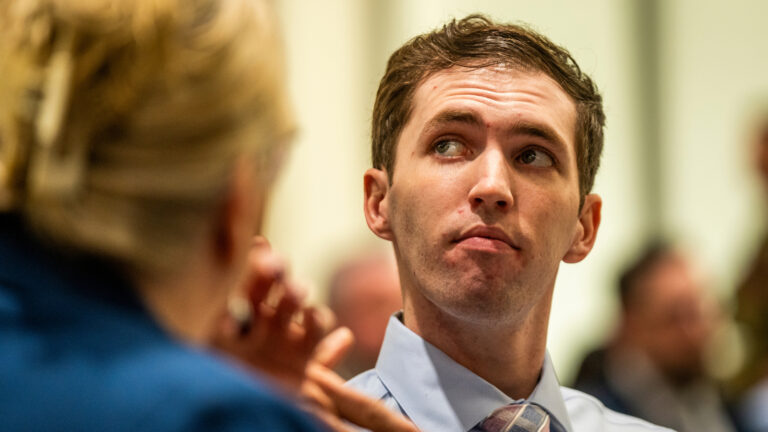
Utah District Court Judge Tony Graf announced Monday that jury selection in the capital murder trial of suspect Tyler Robinson will begin on June 21, 2028, following months of legal discussions over an appropriate trial schedule.
The judge allocated 105 days for the proceedings, reflecting the complexity and high-profile nature of the case.
Graf emphasized that the timeline was designed to protect the constitutional rights of the accused while also recognizing the interests of Kirk’s widow and ensuring fairness throughout the judicial process.
The scheduling decision follows competing proposals from Robinson’s defense attorneys and state prosecutors, who had sharply different views on how much preparation time would be necessary.
Defense lawyers had requested that the trial begin during the third quarter of 2029, arguing that the additional time was essential to prepare an adequate defense in a capital murder case.
In a memorandum submitted last month, the defense maintained that a 2029 trial date would be consistent with the timelines of other death penalty cases in Utah.
The attorneys estimated that the trial could last between six and seven months, with jury selection alone requiring considerable preparation because of the intense publicity surrounding Kirk’s killing.
They also indicated plans to conduct a study examining whether widespread media coverage and public opinion could affect the selection of an impartial jury.
Depending on the findings, the defense may request that the trial be moved to another location to ensure fairness.
State prosecutors, meanwhile, argued that the case could proceed much sooner.
In their court filing, prosecutors said they could be prepared to begin trial as early as October 4, 2027, although they recommended January 31, 2028, as a more practical starting date.
The prosecution explained that the proposed January schedule would help avoid potential disruptions caused by major holidays and severe winter weather.
Prosecutors also estimated that the proceedings would take approximately 17 weeks, significantly less than the six-to-seven-month timeline projected by the defense.
Judge Graf ultimately settled on June 2028, establishing a middle ground between the competing proposals.
Charlie Kirk, a prominent conservative political commentator and founder of Turning Point USA, was fatally shot in 2025 while addressing an audience during an event at a Utah college campus.
His death attracted widespread national attention and sparked renewed debate over political violence, public safety and security at political gatherings.
Robinson was subsequently charged with capital murder in connection with the shooting.
The case has remained under intense public scrutiny, with the court seeking to balance the demands of justice, the rights of the accused and concerns surrounding extensive media coverage.
Robinson remains legally presumed innocent unless proven guilty in court.
With jury selection now scheduled for June 21, 2028, both sides have additional time to prepare evidence, interview witnesses, address legal motions and evaluate potential challenges to the trial’s location.
The possibility of a change of venue could become a major issue as proceedings approach, particularly if the defense argues that extensive publicity makes it difficult to assemble an impartial jury.
The court’s decision to reserve 105 days also highlights the likelihood of lengthy testimony, extensive legal arguments and careful examination of the evidence.
For Kirk’s family, the scheduled trial represents an important step toward resolving the criminal case surrounding his death.
For Robinson, the proceedings will determine his legal responsibility for the killing and the potential penalties he could face if convicted.
As preparations continue, the closely watched case is expected to remain a significant focus of national attention ahead of the June 2028 trial.