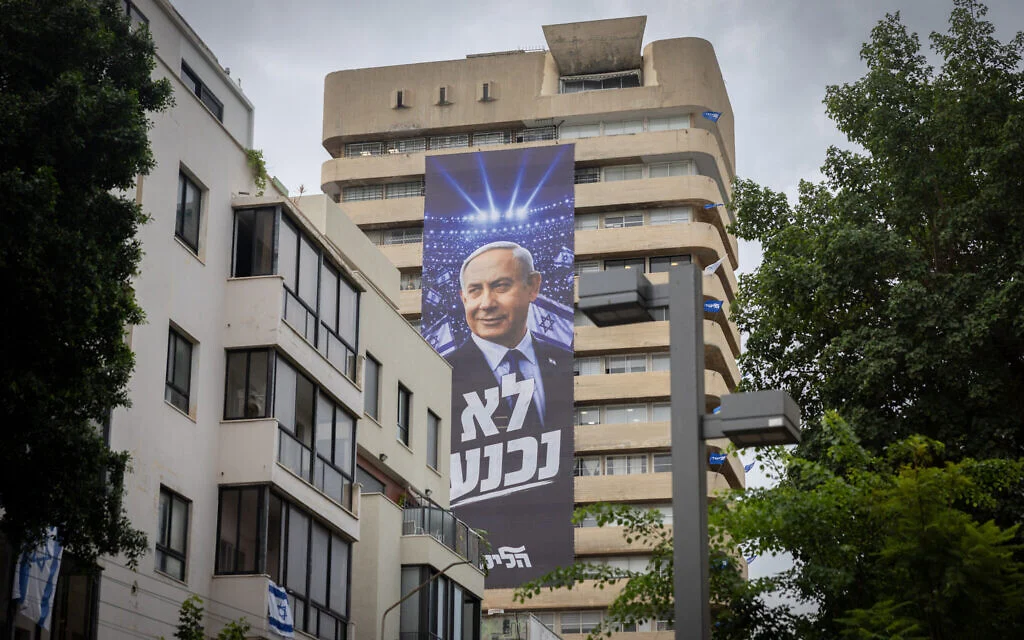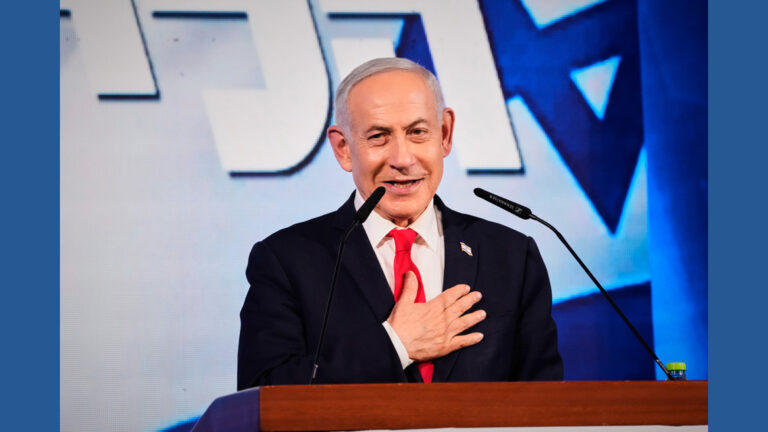
As vote counting continued Wednesday, Prime Minister Benjamin Netanyahu and opposition leaders were preparing for potentially difficult coalition negotiations that could determine who leads the next government.
The election has become a major test of Netanyahu’s political survival, with opposition parties seeking to end his long tenure in office amid deep divisions over national security, the Palestinians and the country’s political future.
According to figures released by Israel’s Central Elections Committee, with approximately 70 percent of votes counted, Netanyahu’s Likud party had secured 20.6 percent of the vote.
The Yashar party, led by former Israeli military chief Gadi Eisenkot, followed with 15.9 percent.
Although Likud remained ahead of its main challenger, its vote share was below the 23.4 percent it received in the 2022 parliamentary election.
The preliminary results did not establish how many seats each party would ultimately hold in the 120-member Knesset.
A governing coalition requires the support of at least 61 lawmakers, making smaller parties potentially decisive in determining the next administration.
With no clear parliamentary majority emerging, negotiations over coalition partnerships could extend for weeks.
One of the election’s most significant developments was the strong performance of Arab-led political parties, which made historic gains and could play a pivotal role in determining the next government.
Arab citizens account for approximately 20 percent of Israel’s population, but their political participation in governing coalitions has long been a contentious issue.
The election results have raised questions about whether opposition parties seeking to remove Netanyahu would be willing to cooperate with Arab-led factions to secure a parliamentary majority.
Such an arrangement could alter Israel’s political landscape, although disagreements over Palestinian rights, national identity and security remain major obstacles.
Speaking early Wednesday, Netanyahu remained defiant despite the uncertain election outcome.
The prime minister, who is seeking to extend his record as Israel’s longest-serving leader, called for the formation of a right-wing nationalist government.
“We must establish a strong, right-wing, nationalist government,” Netanyahu declared.
He also strongly rejected the possibility of forming a government dependent on Arab-led political parties, portraying such an arrangement as a threat to Israel’s national interests.
“We must not endanger Israel and establish a government that relies on anti-Zionist Arab parties,” he said.
Netanyahu’s remarks underscored the ideological divisions that could complicate efforts to form a coalition.
Netanyahu’s principal challenger, Gadi Eisenkot, has adopted a more flexible position regarding potential cooperation with Arab-led parties.
The centrist former military chief has indicated that he would consider such an arrangement under specific conditions.
Those conditions include recognition of Israel as a Jewish state and acknowledgment of Hamas as an extremist organization.
However, several parties expected to support Eisenkot have previously ruled out joining forces with Arab-led factions.
Whether those parties would reconsider their positions to remove Netanyahu from power remains uncertain.
The opposition’s ability to reach an agreement could ultimately determine whether it can form a government despite its ideological differences.
The election attracted the highest voter turnout in more than a quarter-century, reflecting the intense public interest in Israel’s political direction.
The vote took place against the backdrop of prolonged regional conflicts, domestic polarization and continuing disputes over the government’s policies.
The strong participation also demonstrated the importance voters placed on the contest between Netanyahu’s right-wing alliance and opposition parties advocating a change in leadership.
However, the fragmented results suggest that a decisive electoral outcome may remain elusive.
As the remaining votes are counted, attention is shifting toward the political negotiations that will follow the final results.
The distribution of parliamentary seats will determine which parties have the strongest opportunity to assemble a governing majority.
Arab-led parties could emerge as influential players, but longstanding political divisions may limit their ability to participate in a coalition.
For Netanyahu, the challenge will be securing enough support from right-wing and religious parties to remain prime minister.
For Eisenkot and other opposition leaders, the task will be finding common ground among parties with differing positions on national identity, security and cooperation with Arab representatives.
With neither side assured of victory, Israel could face weeks of negotiations before a new government takes shape.
The final election results will provide a clearer picture of the balance of power in the Knesset, but the country’s next prime minister may ultimately be determined through coalition agreements rather than the ballot count alone.