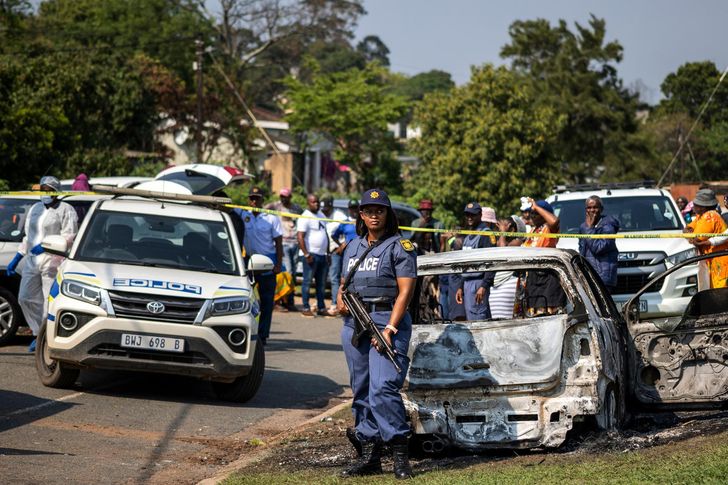
At least 27 people were killed and more than two dozen others wounded in two separate mass shootings in South African townships within hours of each other, police said Sunday.
The first attack occurred late Saturday in Wedela township, southwest of Johannesburg, where police said eight gunmen armed with AK-47 rifles and pistols opened fire at a bar at about 9:30 p.m.
According to the South African Police Service, the attackers initially fired at patrons outside the establishment before moving inside and continuing the shooting.
Seventeen people — 13 men and four women — were killed, while at least 15 others suffered gunshot wounds. Police said the attackers also searched some victims and stole their mobile phones before fleeing in two vehicles.
About four hours later, another mass shooting occurred at a store in Lwandle township near Cape Town.
Police said 10 people were killed and 11 others wounded in the attack, which happened shortly after 1 a.m. Sunday. Authorities are searching for multiple suspects but have not disclosed how many gunmen were involved.
No arrests have been announced in connection with either shooting.
The attacks came just five days after another mass shooting in KwaMakhutha township, south of Durban. Eleven people, including a pregnant woman, were killed Tuesday night when multiple gunmen attacked a house party. Police have not reported any arrests in that case.
The three attacks have left at least 38 people dead in less than a week, intensifying concerns over gun violence and organized crime in South Africa.
The country has long struggled with high levels of violent crime, but experts say mass shootings involving multiple gunmen have become increasingly common, particularly in poorer communities. Authorities have linked some attacks to criminal gangs and the widespread availability of illegal firearms.
Other recent incidents include a June shooting in a Johannesburg neighborhood that killed 12 people and two mass shootings in December that left a combined 21 people dead.
In response to persistent violent crime, President Cyril Ramaphosa deployed soldiers to some of the country’s worst-affected areas in March as part of a yearlong operation supporting efforts to combat organized criminal activity. The deployment includes high-crime areas around Johannesburg and Cape Town.
Ramaphosa has described organized criminal gangs as a major threat to South Africa’s democracy and economic development, although critics have questioned whether deploying the military reflects shortcomings in conventional policing.
Official police statistics recorded 5,427 homicides nationwide between April and June — an average of nearly 60 killings per day.
Firearms remain the most common weapon used in South African homicides, with police and crime experts identifying the large number of illegal guns in circulation as a significant contributor to the country’s violent crime problem.