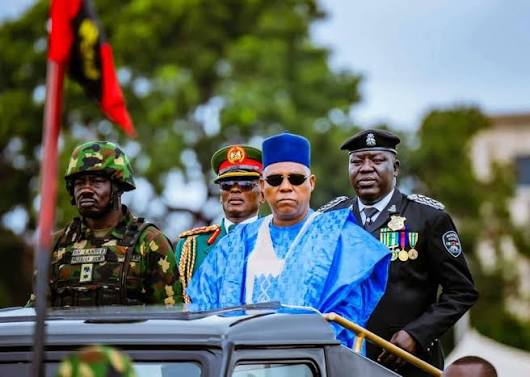
President Bola Tinubu has urged the international community to give greater priority to diplomacy, reconciliation, inclusive political processes and sustainable development, stressing that military victories alone cannot guarantee lasting peace.
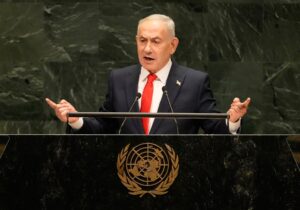
Tinubu, represented by Vice President Kashim Shettima, made the call on Thursday in his address to the General Debate of the 81st Session of the United Nations General Assembly in New York.
Speaking against the backdrop of persistent conflicts across the world, the President said military responses must be matched with political and developmental measures that address the conditions that fuel violence.
“We place our faith in diplomacy because military victories alone cannot secure lasting peace,” Tinubu said.
He called on the United Nations to strengthen peacekeeping efforts while allocating more resources to peacebuilding, mediation, institution-building and sustainable development.
“Prevention must command greater resources and political attention,” he said.
Tinubu reaffirmed Nigeria’s commitment to the UN Charter and urged greater trust in international institutions through dialogue, mutual respect and collective responsibility.
Addressing conflicts in Sudan and other war-torn regions, he called for urgent diplomatic action, protection of civilians and unhindered humanitarian access.
“Within and beyond our continent, no claim to security can justify starving children, denying relief to civilians or erasing communities from the land they call home.”
He also warned that propaganda could undermine accountability for violence.
“We should all be afraid of a world in which we can no longer tell the victim from the aggressor,” he said.
Drawing on Nigeria’s experience in combating Boko Haram, ISWAP and other armed groups, Tinubu said military action must be supported by education, economic opportunities, accountable governance and protection of citizens’ rights.
“Development cannot take root where violence repeatedly uproots livelihoods, and peace cannot endure where injustice and exclusion replenish the ranks of those who threaten it.”
The President further called for stronger international cooperation against terrorism, organised crime, cyberattacks and illicit financing, including enhanced intelligence sharing and institutional capacity.
On insecurity in the Sahel, Tinubu warned that instability in one country could spill across borders, displace populations and disrupt trade, regional integration and democratic governance.
He reaffirmed Nigeria’s commitment to regional cooperation through ECOWAS and African-led solutions to the continent’s challenges.
Turning to global development, Tinubu called for reforms to the international financial architecture, noting that debt servicing was consuming resources that developing countries could otherwise devote to education, healthcare and infrastructure.
“Nigeria therefore calls for reform of the international financial architecture, wider access to concessional financing and debt sustainability frameworks that recognise developmental needs.”
He also advocated greater use of private capital, blended finance, South-South cooperation and strategic partnerships to advance development, climate adaptation and resilient infrastructure.
On climate change, Tinubu rejected what he described as a false choice between economic development and climate action, arguing that developing countries should be supported to industrialise, reduce poverty and expand energy access through low-carbon pathways.
He reaffirmed Nigeria’s commitment to the Paris Agreement and its Energy Transition Plan, which targets net-zero emissions by 2060. He identified renewable energy, clean cooking, gas as a transitional fuel, climate-smart agriculture and nature-based solutions among the country’s priorities.
“Finance must be governed by equity and shared responsibility rather than charity,” he said.
The President also highlighted the growing impact of artificial intelligence, saying its consequences would depend on how the technology is developed and deployed.
“We refuse to surrender our technological future to paranoia,” he said.
Tinubu said Nigeria was investing in digital public infrastructure, broadband connectivity, innovation ecosystems, research institutions and technology entrepreneurship.
“We invite the world to work with our inventive, resourceful and enterprising young people to direct AI towards humanity’s advancement rather than its destruction,” he said.