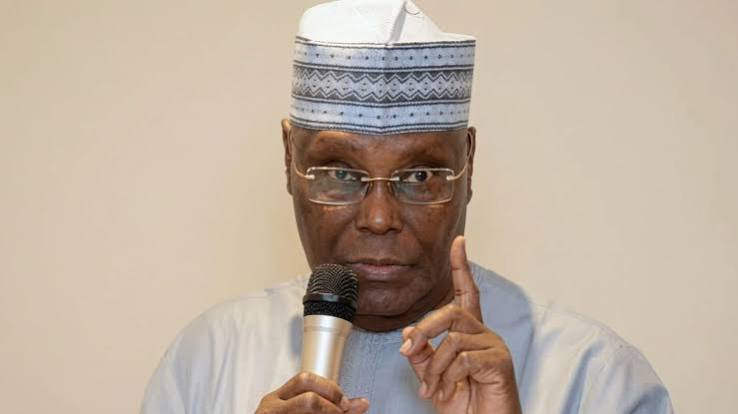
The Presidency has rejected former Vice-President Atiku Abubakar’s proposal to restore petrol subsidy if elected president in 2027, warning that the policy could undermine reforms in the petroleum sector and discourage investment in domestic refining.
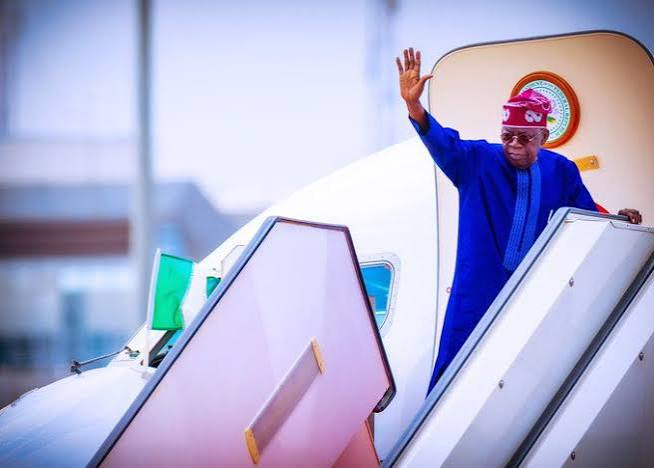
Bayo Onanuga, Special Adviser to President Bola Tinubu on Information and Strategy, described the proposed return to subsidy as retrogressive and fiscally unsustainable, accusing Atiku of pursuing the policy out of “desperation to win the presidency”.
Onanuga argued that Nigeria’s petroleum industry had undergone significant changes since President Tinubu announced the removal of petrol subsidy on May 29, 2023.
Minister of Finance and Coordinating Minister of the Economy, Taiwo Oyedele, had said the removal generated N15.8 trillion for the federation between June 2023 and December 2025. The Federal Government received N5.4 trillion, while N10.4 trillion was shared among states and local governments.
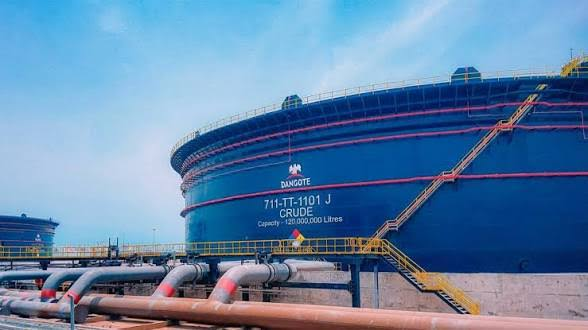
The Presidency further warned that restoring subsidy could create legal and fiscal complications while discouraging investments in domestic refining, including the Dangote Refinery and modular refineries.
Tinubu had earlier described Atiku’s proposal as evidence of his “ignorance” of governance and the economy when he received Osun State Governor Ademola Adeleke at the State House.
Atiku, the African Democratic Congress (ADC) presidential candidate, has made subsidy restoration a major component of his 2027 campaign, arguing that Nigerians have not seen enough benefits from its removal.
Although he backed subsidy removal during the 2023 presidential election, Atiku now argues that the policy has failed to improve Nigerians’ living standards.
His proposed alternative would support domestic refineries through a controlled intervention, with government assistance capped, budgeted and tied to verifiable production and consumer benefits.
Atiku said crude allocations would be monitored to ensure Nigerians benefit, insisting that his proposal was not a return to the opaque subsidy regime of the past but a mechanism to support local refining and pass cheaper crude feedstock benefits to consumers.
However, financial expert and President of the Capital Market Academics of Nigeria (CMAN), Prof. Uche Uwaleke, said the debate should centre on the most sustainable use of scarce public resources to improve citizens’ welfare.
He noted that the former subsidy regime had imposed a heavy burden on public finances while encouraging arbitrage, smuggling, rent-seeking and other abuses.
“The success of subsidy removal should not be measured simply by whether government stopped paying the subsidy.
“It should be measured by whether it succeeded in converting that difficult sacrifice into a more productive economy, stronger public services, increased domestic production and a better quality of life for the ordinary Nigerian,” Uwaleke said.
Global financial analyst and development economist, Prof. Ken Ife, also opposed a blanket fuel subsidy, arguing that Nigeria should focus on supporting production rather than artificially lowering pump prices.
“In broad macroeconomic terms, and even in development economies, you do not subsidise consumption. What you subsidise is production.
“You cannot borrow money to pay for subsidy. That is unlawful when you consider Fiscal Responsibility Act. It does not recognise that as a legitimate expenditure or as a legitimate borrowing,” he said.
Despite the criticism, some Nigerians said the hardship caused by subsidy removal had made Atiku’s proposal appealing.
A civil servant, Ibrahim Abbas, said workers had expected subsidy removal to release funds for faster infrastructure development and economic growth.
“The only thing we civil servants have experienced since subsidy was removed is economic hardship and a huge depletion of the purchasing power of the Naira.
“The implementation of the new minimum wage is still shrouded in confusion, and all these make Atiku’s proposal attractive to ordinary Nigerians,” he said.
A retired civil servant, Sule Aliu, similarly said the economic consequences of subsidy removal had been particularly severe for retirees since 2023.