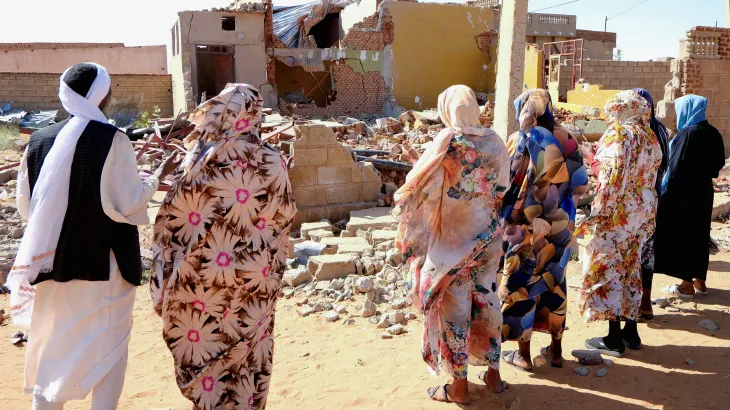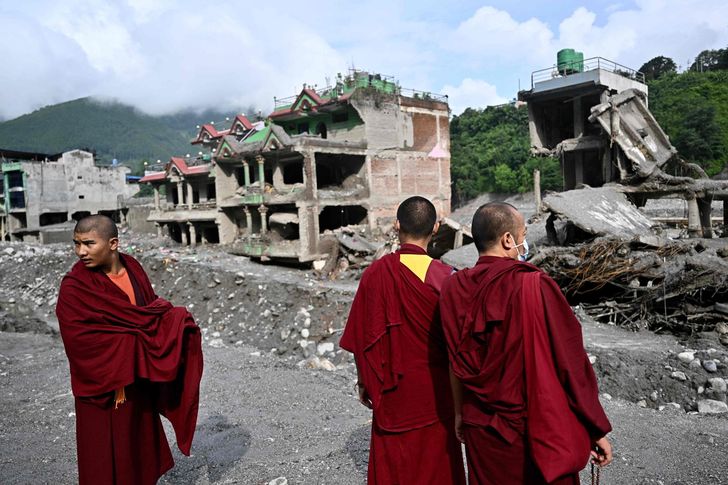
Nepalis observed the traditional final day of Hindu mourning on Monday for hundreds of people killed in the catastrophic flooding along the country’s border with China, as rescue teams continued searching for thousands still missing.
Government offices across the Hindu-majority nation, as well as Nepalese diplomatic missions abroad, lowered the national flag to half-mast to mark the 13th day following the disaster, according to the Home Ministry.
In Hindu tradition, the 13th day is considered the final day of the formal mourning period, when families commemorate the dead through religious rituals and food offerings.
The disaster struck on August 26 when a massive wall of mud and rock, triggered by a glacier breaking off, crashed into a river along the Himalayan border between Nepal and China’s Tibet region. The resulting flood swept through towns and villages and buried roads and highways beneath mud and debris.
At least 1,380 people have been confirmed dead, while more than 5,500 remain missing.
Despite the scale of the devastation, recent rescues have raised hopes that more survivors could still be found.
Four people have been rescued in recent days, including a Chinese national who was pulled alive from a tunnel on Saturday. Two Nepalese hydropower workers were rescued from another tunnel on Friday, while a Nepalese woman was found alive inside her buried home on Saturday.
Nepal Army spokesperson Raja Ram Basnet said rescue efforts were being concentrated around hydropower facilities in the affected region, where authorities believe more survivors may still be trapped.
Across the border in Tibet, Chinese officials said Sunday that rescue workers had recovered another 12 bodies as searches continued for hundreds of missing people.
Despite Monday marking the final day of official mourning, Nepal’s government did not organize wider commemorative ceremonies because search-and-rescue operations remain underway.
“There are no government programmes organised as the rescue and search operation is still going on in the flood-hit areas,” Phanindra Paudel of Nepal’s National Emergency Operation Centre said.
President Ram Chandra Paudel was touring affected communities on Monday to assess the scale of the destruction, according to his office.
Search teams are continuing operations across the disaster zone as authorities race to locate survivors and account for thousands of people still missing nearly two weeks after the flood.