The State Department announced the departure order following a series of attacks on civilian and energy infrastructure in Saudi Arabia, raising concerns that the nearly eight-month conflict in the Middle East could expand further.
State Department spokesperson Tommy Pigott confirmed the decision in a post on X, explaining that the directive applies specifically to Saudi Arabia because of increasing Houthi attacks on civilian targets.
However, Reuters reported that Washington is also considering withdrawing family members from other diplomatic missions across the region.
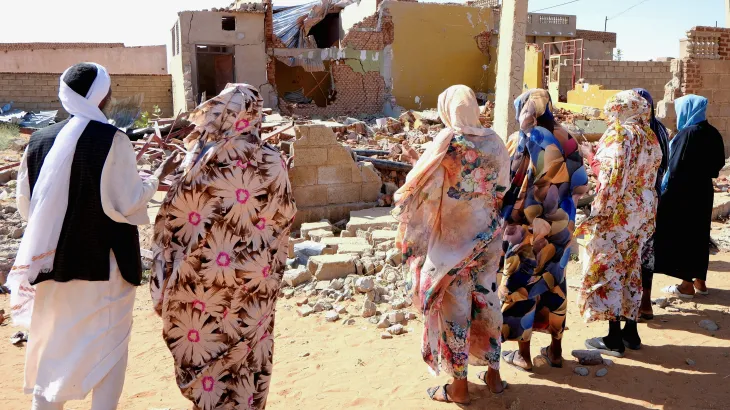
The heightened security measures follow deadly strikes on Saudi infrastructure.
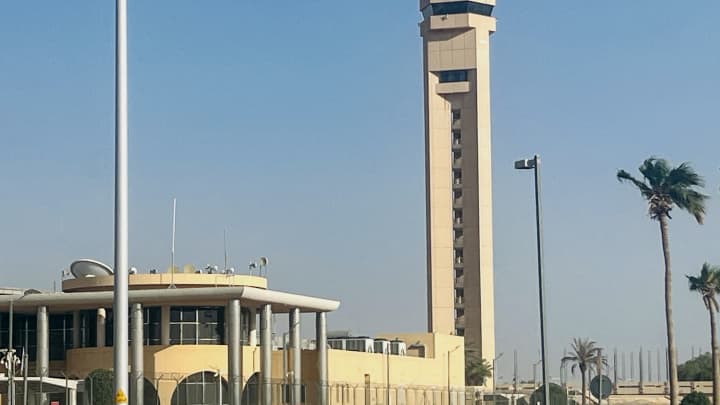
On Wednesday, an attack on King Fahd International Airport in Dammam killed at least one person and injured eight others.
In a separate incident, a drone attack on Saudi Aramco’s Shaybah oil field killed two people, according to the Saudi Press Agency.
Saudi authorities said operations at the oil facility were not disrupted.
The diplomatic developments come as U.S. and Israeli military officials reportedly advance plans for possible renewed strikes against Iran following next month’s U.S. midterm elections.
According to The New York Times, which cited unnamed American officials, military planners are considering a “short but intensive” operation targeting strategic Iranian facilities.
Potential targets reportedly include energy infrastructure, nuclear installations, and missile and drone capabilities.
The newspaper also reported that American and Israeli forces have intensified joint military preparations, including aircraft exercises over Iraq designed to rehearse potential strike operations.
Defense Secretary Pete Hegseth reportedly traveled to Israel this week for an unannounced meeting with Prime Minister Benjamin Netanyahu to discuss possible military action.
However, President Donald Trump has not authorized the proposed strikes.
The Times reported that Trump has repeatedly rejected plans to resume large-scale combat operations this year, underscoring the uncertainty surrounding any potential military escalation.
Despite the reported military preparations, American and Iranian negotiators remain engaged in discussions concerning Tehran’s nuclear program and security arrangements involving the Strait of Hormuz.
The diplomatic efforts are taking place against a backdrop of continued military threats and instability across the region.
Iranian officials have warned that any renewed escalation could prompt attacks against additional infrastructure, including data centers and undersea internet cables.
Tehran has also maintained its refusal to make concessions on its nuclear program.
The competing diplomatic and military developments have raised concerns about the possibility of a broader regional conflict.
The escalating tensions are also affecting global energy markets, with Brent crude climbing above $110 per barrel and U.S. West Texas Intermediate crude rising approximately 1% to $98.12.
Although shipping disruptions have continued in the Strait of Hormuz, commodity analytics firm Kpler reported that Middle Eastern oil flows through the vital waterway have recovered to levels approaching those recorded before the war.
However, analysts warn that renewed demand from China could place additional upward pressure on crude prices.
Muyu Xu, a senior crude oil analyst at Kpler, said Chinese oil imports are expected to increase as refineries boost production and domestic inventories decline.
“China’s crude import demand is expected to continue recovering, driven by rising refinery throughput and rapidly declining crude inventories,” Xu said.
According to Kpler’s estimates, the conflict has accelerated the depletion of China’s oil stockpiles, with inventories falling at a record pace of approximately 1.6 million barrels per day in September.
Despite those declines, China is estimated to retain roughly 1.1 billion barrels in reserves, equivalent to approximately 80 days of refinery requirements.
Xu noted that most Iranian oil shipments already outside the U.S. blockade have been delivered, making substantial new arrivals from Iran increasingly unlikely.
The changing supply situation is expected to increase competition among Chinese refiners for available Middle Eastern crude.
State-owned refineries are likely to seek additional supplies as they increase processing activity and replenish depleted inventories.
Independent refiners are also exploring alternatives to Iranian oil, potentially providing further support for regional crude prices.
Analysts say these developments could limit downward pressure on Dubai-linked crude pricing benchmarks, even as uncertainty continues over the direction of the conflict.
With the United States reducing its diplomatic presence in Saudi Arabia, military contingency planning reportedly advancing and oil prices remaining elevated, the Middle East faces renewed uncertainty.
For now, the prospect of additional U.S. and Israeli strikes against Iran remains unconfirmed, while diplomatic negotiations continue alongside heightened military preparations.