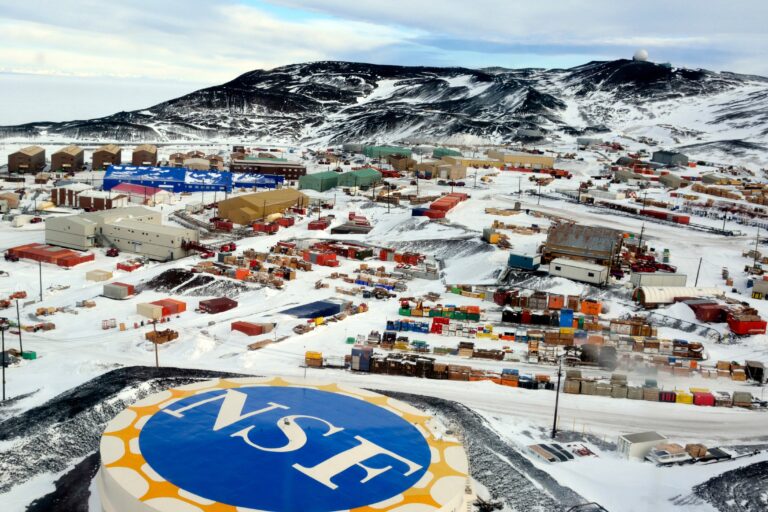
An Australian air crew has carried out a rare midwinter medical evacuation from Antarctica, flying an American from a U.S. research base to a hospital in New Zealand after an urgent request for assistance.
The rescue operation began on July 31 when an Airbus A319 Long Range aircraft, operating under the call sign Snowbird 1, departed Hobart, Australia, for the U.S. McMurdo Station in Antarctica.
Melbourne-based aviation company Skytraders, which operates the aircraft under contract with the Australian Antarctic Division (AAD), said the mission was launched following an “urgent request for assistance.”
After a flight lasting about five and a half hours, the aircraft landed at Phoenix Airfield near McMurdo Station in complete darkness and extreme winter conditions, with temperatures falling to minus 43 degrees Celsius, or minus 45.4 degrees Fahrenheit.
The patient was evacuated the same day and flown to Christchurch, New Zealand, as weather conditions at the Antarctic airfield began to deteriorate.
The U.S. National Science Foundation told the Australian Broadcasting Corporation that the American was admitted to Christchurch Hospital in serious condition.
The Australian Antarctic Division said Friday that the patient continued to receive medical treatment in Christchurch. Officials have not disclosed the nature of the medical emergency.
“This was a complex operation carried out in the depths of the Antarctic winter, and it highlights both the capability of our people and the strong partnerships that underpin Antarctic programs around the world,” AAD Director Emma Campbell said.
New Zealand’s Health Ministry declined to provide an update on the patient’s condition or confirm whether the American remained hospitalized.
Medical evacuations from Antarctica during the winter are particularly challenging because of prolonged darkness, extreme temperatures, rapidly changing weather and limited opportunities for aircraft to safely land and take off.
The successful operation highlighted the international cooperation required to respond to emergencies in one of the world’s most remote and hostile environments.