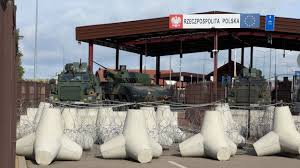
Poland will deploy both antipersonnel and anti-tank land mines along its eastern frontier in response to what officials describe as a growing threat from Russia, Deputy Defense Minister Paweł Zalewski said Friday, as the country formally withdrew from an international treaty banning the controversial weapons.
Warsaw’s exit from the 1997 Anti-Personnel Mine Ban Treaty — commonly known as the Ottawa Convention — took effect Friday. The treaty prohibits signatories from stockpiling, producing or using antipersonnel mines, which can remain active for years and have caused widespread civilian casualties in former conflict zones such as Cambodia, Angola and Bosnia and Herzegovina.
Poland ratified the convention in 2012 and completed the destruction of its antipersonnel mine stockpiles in 2016. Officials now say the deteriorating security environment following Russia’s invasion of Ukraine has prompted a reassessment.
“These mines are one of the most important elements of the defense structure we are constructing on the eastern flank of NATO, in Poland, on the border with Russia in the north and with Belarus in the east,” Zalewski said. He argued that Poland must strengthen its defenses against a Russia that “has very aggressive intentions vis-à-vis its neighbors” and never joined the treaty.
Poland last year joined Finland and the Baltic states — Estonia, Latvia and Lithuania — as well as Ukraine in announcing plans to withdraw from the agreement. Russia and the United States are among nearly three dozen countries that have never acceded to the treaty.
Zalewski said Poland will restart domestic production of both antipersonnel and anti-tank mines in cooperation with national defense manufacturers, with the aim of achieving self-sufficiency.
Anti-tank mines, which are designed to detonate under the weight of vehicles rather than individuals, are not prohibited under the Ottawa Convention. Antipersonnel mines, however, are widely criticized for the long-term risks they pose to civilians.
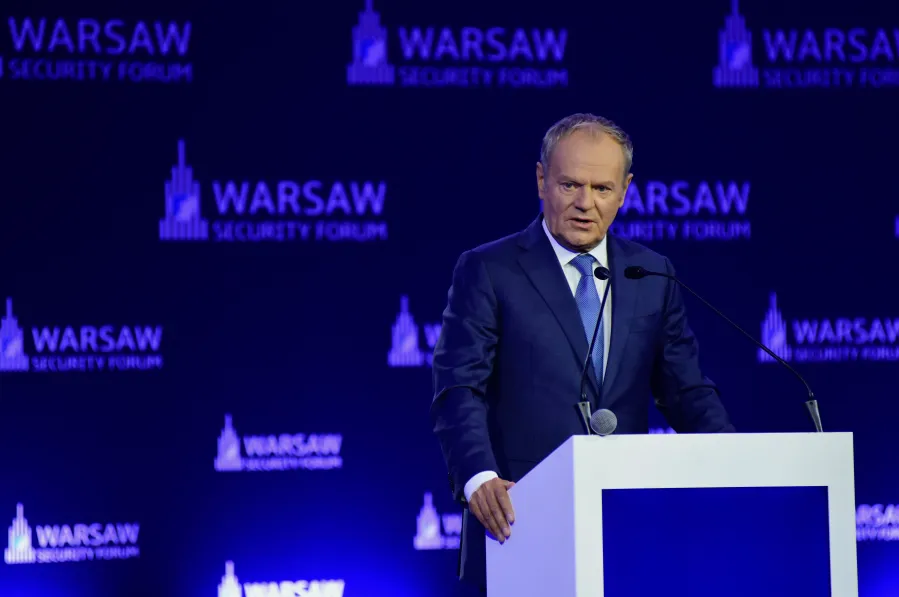
Prime Minister Donald Tusk said Thursday that Poland would “soon” have the capacity to mine its eastern borders within 48 hours in the event of a security threat. He made the remarks after attending a demonstration of “Bluszcz,” an unmanned vehicle developed to deploy anti-tank mines by Polish defense company Belma S.A. in partnership with a military research institute.
The decision underscores heightened tensions along NATO’s eastern flank as European nations reassess defense strategies amid ongoing regional instability.