The Lagos State Government has strongly criticized the National Assembly over the proposed Central Gaming Bill, describing it as unconstitutional and a violation of a Supreme Court ruling.
Speaking at a press briefing in Lagos on Wednesday, the state’s Attorney General and Commissioner for Justice, Lawal Pedro (SAN), said the bill represents “a voyage of unconstitutionality.”
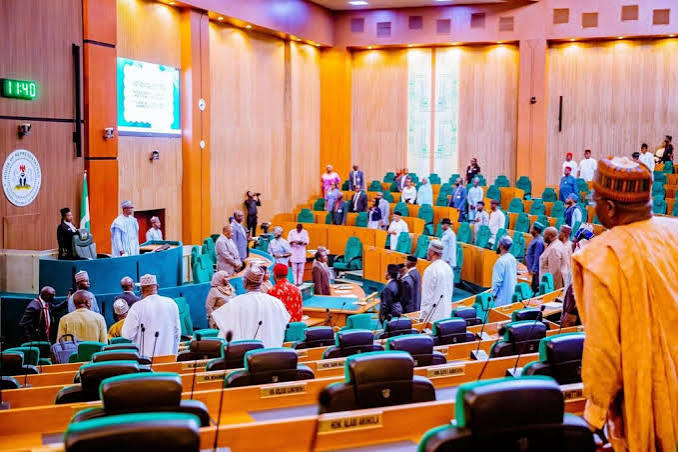
The proposed legislation, known as the Central Gaming Bill 2025, was presented for concurrence at the Senate plenary on October 7. It seeks to create a nationwide regulatory framework for online and remote gaming, replacing the repealed National Lottery Act of 2005.
However, Lagos insists the move directly contradicts both the Nigerian Constitution and a subsisting judgment of the Supreme Court.
In November 2024, the apex court ruled that the National Lottery Act 2005 could no longer be enforced in any state, except the Federal Capital Territory (FCT). The court held that the National Assembly’s power to legislate on gaming and lotteries is limited solely to the FCT.
Addressing journalists, Pedro said, “As the Chief Law Officer of Lagos State, it is both my constitutional duty and responsibility to draw the nation’s attention to the voyage of unconstitutionality embarked upon by the National Assembly to enact Act to regulate the operation and business of all forms of online and remote gaming across the geographical boundaries of the federating units and beyond the borders of Nigeria.”
He further explained that while the legislature can amend laws, it cannot directly overturn a Supreme Court decision.
“Though it is conceded it can indirectly nullify its effect, but only by changing the underlying law on which the judgment was based to remove the foundation of the judgment.”
Pedro emphasized that in this case, the underlying law is the Constitution of the Federal Republic of Nigeria, which has not been amended to include lotteries, gambling, or gaming on the exclusive legislative list.
“The Central Gaming Bill, as currently constituted, directly conflicts and contradicts the provisions of the extant Constitution of Nigeria and a subsisting and binding judgment of the Supreme Court of Nigeria on the subject,” he said.
He added, “Consequently, as of today, the National Assembly can only legislate on lottery, game and gambling for the Federal Capital Territory, Abuja.”
Pedro warned that pressing ahead with the proposed law could have serious implications. “If the National Assembly proceeded with the Bill, the consequences will be grave. It would amount to legislating in defiance of a binding Supreme Court decision, which is the highest expression of contempt of court.”