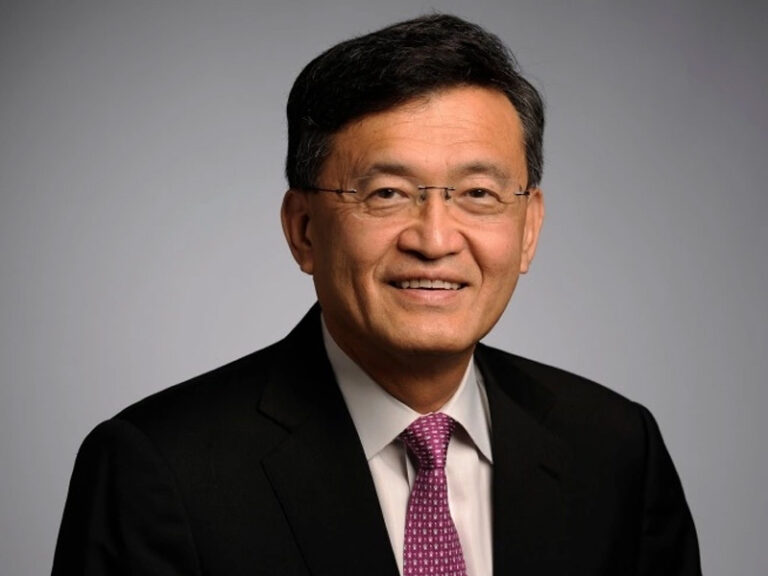
President Donald Trump on Thursday called for the immediate resignation of Intel’s newly appointed CEO Lip-Bu Tan, accusing him of being “highly conflicted” due to past investments in Chinese firms, some reportedly linked to the Chinese military. The demand has sparked concerns about leadership stability at a critical time for the American semiconductor giant.
In a post on his Truth Social platform, Trump declared, “The CEO of INTEL is highly CONFLICTED and must resign, immediately. There is no other solution to this problem.”
Tan, a veteran tech executive and former CEO of Cadence Design Systems, has been under scrutiny following an April Reuters investigation that revealed he had invested at least $200 million in Chinese chip and advanced manufacturing companies, including some with military ties. Some of these investments were made personally, while others were through venture funds he founded or managed.
Trump’s remarks came a day after Senator Tom Cotton (R-Ark.) sent a letter to Intel’s board chair raising questions about Tan’s connections to China and Cadence’s involvement in a recent criminal case. In July, Cadence agreed to plead guilty and pay over $140 million to resolve U.S. charges related to selling software to a Chinese military university during Tan’s tenure as CEO.
Intel’s stock fell 3% on Thursday following the president’s comments, reflecting investor unease. The company is currently overseeing one of the largest domestic chip expansion projects in the U.S., supported by $8 billion in CHIPS Act subsidies aimed at revitalizing domestic semiconductor production.
In a statement on Intel’s website, Tan defended his leadership and emphasized his alignment with U.S. national interests:
“My reputation has been built on trust—on doing what I say I’ll do, and doing it the right way. This is the same way I am leading Intel.”
He added that the company is actively engaging with the Biden administration to address concerns and clarify facts.
Intel echoed Tan’s remarks, stating it was committed to U.S. national and economic security and was making substantial investments aligned with the administration’s America First industrial strategy.
Despite the controversy, some investors cautioned against direct presidential involvement in corporate leadership decisions.
“It would be setting a very unfortunate precedent,” said Phil Blancato, CEO of Ladenburg Thalmann Asset Management. “You don’t want American presidents dictating who runs companies, but certainly his opinion has merit and weight.”
David Wagner, a portfolio manager at Intel shareholder Aptus Capital Advisors, suggested Trump’s intervention underscores his focus on reshoring business: “It’s just another signal that he’s very serious about trying to bring business back to the U.S.”
Analyst Stacy Rasgon of Bernstein said the issue may reflect optics more than substance:
“We don’t believe Lip-Bu is ‘conflicted,’ though given the nature of this administration, the China ties are increasingly creating a bad look.” Rasgon also noted Tan has not built the kind of personal rapport with Trump that might have softened the criticism.
A White House official reaffirmed the president’s stance, saying, “President Trump remains fully committed to safeguarding our country’s national and economic security. This includes ensuring iconic American companies in cutting-edge sectors are led by men and women who Americans can trust.”
Tan’s future at Intel now hangs in the balance as the board, shareholders, and the administration weigh the fallout from the deepening controversy.