Nigeria has recorded its worst rating on Transparency International’s (TI) Corruption Perception Index since 2015.
In the 2020 index released on Thursday, the country scored 25 out of 100 points, dropping to 149 out of the 180 countries surveyed, taking the nation three steps down from the 146 scored in 2019.
According to Transparency International, the nation’s drop in ranking stems from an absence of transparency, nepotism, lack of adequate anti-corruption legal frameworks, the prevalence of bribery and extortion in the Nigerian Police, corruption in the security sector, among others.
Below is a report as sent out by The Civil Society Legislative Advocacy Centre (CISLAC)/ Transparency International Nigeria in conjunction with The Centre for Democracy and Development (CDD) and BudgIT.
Corruption Perceptions Index 2020: “Corruption in Pandemic Response and Law Enforcement drags Nigeria’s corruption perception further down”
EMBARGOED UNTIL 6:00 CET, 28 th of January, 2021.
28 th of January, 2021In Abuja: The 2020 Corruption Perceptions Index (CPI) released globally by
Transparency International (TI) today shows that Nigeria yet again, records a
decline in the CPI in 2020.Published exclusively in Nigeria by the Civil Society Legislative Advocacy
Centre (CISLAC), the National Chapter of TI, the index reveals that Nigeria
scored 25 out of 100 points in the 2020 CPI, falling back by one point
compared to last year.In the country comparison for this year, Nigeria ranks 149 out of 183 countries -three places down compared to 2019 results.
The CPI aggregates data from 8 (eight) different sources that provide
perceptions by Nigeria’s business community and country experts on the
level of corruption in the public sector.While the index does not show specific incidences of corruption, it is an indication of the perception of the
Nigerian public about the state of corruption in the country.The index iscompletely impartial, objective and globally well respected.
This result is coming at the heels of numerous challenges facing the country
ranging from the Covid-19 pandemic, insecurity, high unemployment and a
sharp increase in government borrowing amongst others.While releasing its report on “Rising to the Challenge: Nigeria’s COVID
Response” in December, 2020 the World Bank warned that “In the next three
years, an average Nigerian could see a reversal of decades of economic growth
and the country could enter its deepest recession since the 1980s.” According
to the Council on Foreign Relations (CFR) which is an independent think tank2
the organization, Nigeria witnessed a total of 2,860 kidnappings in 2020 which was
up from 1,386 in 2019. The picture is further gloomy when taking into
consideration the Unemployment Data for the second quarter of 2020 released
by the National Bureau of Statistics (NBS). This survey by the NBS which is
the government’s statistical agency shows that one in two Nigerian is either
unemployed (27.1%) or underemployed (28.6%). Each of these challenges can
be linked to corruption and mismanagement of public resources, which further
exacerbates the economic and health impact of the terrible global pandemic.
Nigeria’s CPI score is just another reminder of the need for a fast, transparent,
and robust response to the challenges posed by corruption to Nigeria. It is
worrying that despite the numerous efforts by state actors on the war against
corruption, Nigeria is still perceived by citizens and members of the
international community as being corrupt. CISLAC/TI is forced to ask why the
results do not commensurate with the efforts?
Despite the fact that CISLAC and Nigerian partners do not collect the CPI data
as this is done by independent, reputable organisations, we and other well-
meaning citizens have experienced push-back from various governments and
their supporters when the CPI results and other indices turn unfavourable.
Some of these pushbacks include labelling us “unpatriotic citizens”. In some
instances, physical attacks were experienced.Going forward, we use this medium to call on the government and her
supporters to examine the drivers behind Nigeria’s deteriorating anti-corruption
image and consider actions, which will tackle systemic corruption. We
guarantee that the perception will improve in the short term. As law abiding
citizens, CISLAC/TI and other partner organizations are willing to work with
state and non-state actors on how to collectively improve Nigeria’s fight
against corruption as we have always done in the past.
CISLAC/TI and partners suspect a list of key weaknesses to explain why
Nigeria may not have improved in the fight against corruption. Although there3
is a various extent of the below-mentioned factors on the unfavourable ranking
this year, we feel that these areas require immediate improvement for the sake
of well-being of ordinary Nigerians:
Weakness 1: Absence of transparency in the COVID-19 pandemic
response With the COVID-19 pandemic out of Nigeria’s responsibility, there has been
a lack of transparency in the emergency response of the government. Coupled
with the gap in coordination, the process has been fraught by incessant flouting
of procurement guidelines, hoarding of relief materials and diversion of these
materials which are then used as personal souvenirs presented to political party
loyalists and close associates. We find it disturbing that in some cases, supplies
donated by a group of well-meaning Nigerian business persons, corporate
entities, development partners and others under the Coalition Against COVID-
19 (CACOVID) were left inexplicably undistributed, and in some cases rotten,
by the federal and state governments. While these occurrences are not specific
to Nigeria, citizens are yet to see concrete action by the anti-graft agencies on
these issues.Weakness 2: Nepotism in the public service appointments and promotions
In the past year, we witnessed nepotism and favoritism in the appointment and
promotion of some public officers. For example, all Nigerians remember the
controversy which trailed the decision of the National Judicial Council (NJC)
when at least 8 (eight) of the 33 judges recommended for appointment by the
NJC were either children or relatives of current or retired Justices of the
Supreme or Appeal Courts. The Nigerian Ministry of Foreign Affairs in itself is
not an exception with allegations of individuals promoted on the basis of their
relationship and other affiliations as against merit and other criteria stated in
the rule books. Reports around the commercialization of employment into
various institutions including admission into various tertiary educational
institutions put the nation in bad light. The extortion for the acquisition of4
services like healthcare, passports renewal and obtaining of visas creates a
negative perception of corruption in Nigeria.
Weakness 3: Lack of adequate anti-corruption legal frameworks and
interference by politicians in the operation of law enforcement agencies.
CISLAC/TI is not oblivious of some successes recorded by the Nigerian
government such as the Transparency portal managed and implemented by the
Office of the Auditor General. These activities have the potential to bring
corruption and wastefulness of the government agencies at all levels to the end.
We fully support this initiative.
Important anti-corruption legislations such as the Companies and Allied
Matters Act (CAMA, 2020) and the Police Act 2020 undeniably signal move in
the right direction. However, more needs to be done to enact legislation and
implement it.
The repeated failure to enact the Proceeds of Crime Act as a legal framework
for the management and utilization of recovered assets in Nigeria which is one
of the key pillars of this administration’s anti-corruption strategy is
inexplicable! There is still a lack of accountability in some quarters of
government, especially in terms of beneficial owners of lucrative government
contracts. Out of millions of corrupt transactions experienced annually, only a
few hundreds of offenders are investigated, let alone convicted on corruption
charges.
The current scenario where different institutions like the Economic and
Financial Crimes Commission (EFCC), Independent Corrupt Practices and
Other Related Offences Commission (ICPC), Code of Conduct Bureau,
National Drug Law Enforcement Agency the Nigerian Police and other
agencies overlap with mandates and lack synergy is not sustainable and have
proven to be a leeway to corruption. The infighting and politicizing of the anti-
corruption agenda may be evident by the way of suspending the Acting
Chairman of the Economic and Financial Crimes Commission (EFCC) Mr.5
Ibrahim Magu. The accusation that he failed to give a proper account of assets
recovered by his agency is questionable provided no clear legal and policy
asset recovery framework exists. CISLAC/TI will like to point out that the
theatric handling of the suspension of Mr. Magu could have been done better
and this greatly contributes to the negative image of Nigeria’s anti-corruption
campaign. The absence of a Whistle Blower Protection Legislation leaves
Nigerian anti-corruption agencies deprived of key insider intelligence without
which an anti-corruption crusade is a mission impossible.
Weakness 4: Prevalence of bribery and extortion in the Nigerian Police
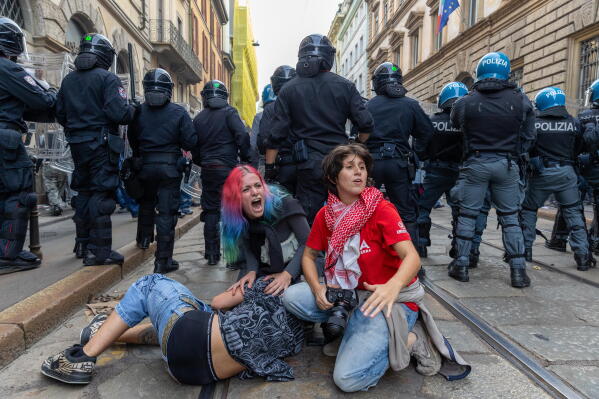
The year 2020 witnessed the #EndSARS protests which saw young people
across the nation demanding an end to police brutality and corruption. A factor
that led to this protest was widespread bribery and extortion by law
enforcement officials especially the police. The first and second national
corruption surveys conducted by the United Nations Office on Drugs and
Crime (UNODC) in partnership with the government’s National Bureau of
Statistics (NBS) and released in 2017 and 2019 both showed the Nigerian
Police is the institution with the highest prevalence of bribery amongst the
institutions measured. While there have been commendable efforts by the
Police Complaints Response Unit (CRU) in reducing police abuses, there is a
need to scale up the efforts of the unit to meet the demands of citizens as
contained in the Police Act 2020.
Weakness 5: Security sector corruption
From violent extremism and insurgency to piracy, kidnapping for ransom,
attacks on oil infrastructure, drug trafficking, and organized crime, Nigeria
faces a host of complex security challenges. These threats typically involve
irregular forces and are largely societally based. They are most prevalent and
persistent in marginalized areas where communities feel high levels of distrust
toward the government—often built up over many years. At their root, these
security challenges are symptoms of larger failures in governance.6
As many of Nigeria’s security threats are domestic in nature, the Nigeria Police
Force (NPF) is often the primary security interface with the public. However,
low levels of public trust in the police inhibit the cooperation needed to be
effective against these societally based threats.
Nigeria’s security system is also perceived to be politicized. Leaders are often
appointed based on their political allegiances rather than on their experience or
capabilities in law enforcement. As a result, the quality of leadership at the
helm of affairs suffers. Appointees under such circumstances feel loyalty to
their political patron rather than to their institutions or citizens. How and to
whom the law is applied is not consistent. Norms of professionalism and ethics
are weakened.
The problem of non-meritocratic leadership is exacerbated by a command-and-
control structure that is opaque, centralized, and often chaotic. security leaders
who have not earned their position lose the respect of their colleagues, who are
then more likely to abandon a unit when facing an armed threat. Insufficient
understanding or commitment to effectiveness among a force’s leadership often
results in the neglect of training. Problems of police engagement with
communities are thus perpetuated.
The continuous opaqueness in the utilization of security votes contributes to
corruption perception in the country and this process must be reformed
especially when we have security agencies living and working in very poor
conditions. Multiple reports of police officers protesting non-payment of
allowances for election duties are now seen. The result of this is the widespread
kidnappings, banditry and terrorism ravaging different parts of the country.
Having itemized the key weaknesses that resulted in Nigeria’s decline of the
CPI 2020, members of CISLAC/TI and other civil society organisations of like
minds understand that as patriotic citizens it is our duty to criticize
constructively. To this effect, we will like to advice the government to
implement these recommendations:7
1. Transparency in the utilization of covid-19 relief funds by state and
non-state actors must be ensured. The National Assembly and
relevant anti-graft agencies must follow up cases of corruption in
the covid-19 response process and reports from the Auditor
General’s office. The office of the Auditor General should also be
strengthened to carry out an audit of the COVID-19 relief
process.
2. Public servants should be appointed, appraised and promoted on
merit to reduce the level of nepotism and favouritism. Lop-sidedness
in appointments increases perception of corruption of the due
process.
3. The National Assembly should speed up the deliberation and
passage of relevant anti-corruption related laws or amendments to
strengthen the anti-corruption efforts in the interest of Nigerians.
The presidency should assent to these laws once they are passed
while taking into consideration the best interest of citizens.
4. The government should commit to police reform by ensuring the
full implementation of the Police Act 2020, support the ongoing
judicial panels of enquiries and prioritize the welfare of the
personnel of the Nigerian Police.
5. The government should put in place a transparent monitoring
framework for Security votes. The government should also ensure
that these funds are channelled to security and defence agencies.
6. The Federal Government should urgently constitute the National
Council on Public Procurement (NCPP) to actively coordinate the
activities of the Bureau of Public Procurement and give full effect to
the Public Procurement Act 2007.
7. The government must ensure democratic and free civic space for
engagement with citizenry and the media.
8. We call on revenue generating agencies like the Federal Inland
Revenue Service, the National Ports Authority and the Nigerian
Customs Service to ensure that they improve efforts to curb
extortion and bribery among their officials.
9. There is also a need to operationalize the anti-corruption strategy to
ensure that anti-corruption efforts are not concentrated at the
federal level alone. Also other arms of government need to be
involved in the fight against corruption. It shouldn’t be left alone to
the executive alone.8
Ladies and gentlemen of the press, you will agree with us that it would be
of immense benefit to public institutions, the government and Nigerian
citizens if these recommendations are implemented.
God Bless the Federal Republic of Nigeria!
Signed:
The Civil Society Legislative Advocacy Centre (CISLAC)/ Transparency
International Nigeria.
The Centre for Democracy and Development (CDD)
BudgIT
Contact
Auwal Ibrahim Musa (Rafsanjani)
Executive Director CISLAC
16 P.O.W. Mafemi Crescent, Off Solomon Lar Way, Behind Chida Hotel, Utako
District, Abuja. Nigeria
Phone: (234) 0803 384 4646
Email: cislac@cislacnigeria.net
Web: http://cislacnigeria.net