The United States launched a new wave of airstrikes after Iranian forces targeted a commercial vessel transiting the Strait of Hormuz, triggering another sharp escalation in tensions across the Middle East.
In retaliation, Iran’s Islamic Revolutionary Guard Corps announced that the strategic waterway had been closed until further notice and launched missile and drone attacks against U.S. military positions and allied countries across the region.
The IRGC said it had targeted a U.S. military base in Jordan, while authorities in the United Arab Emirates, Qatar, Kuwait and Bahrain responded to incoming missiles and drones launched from Iran.
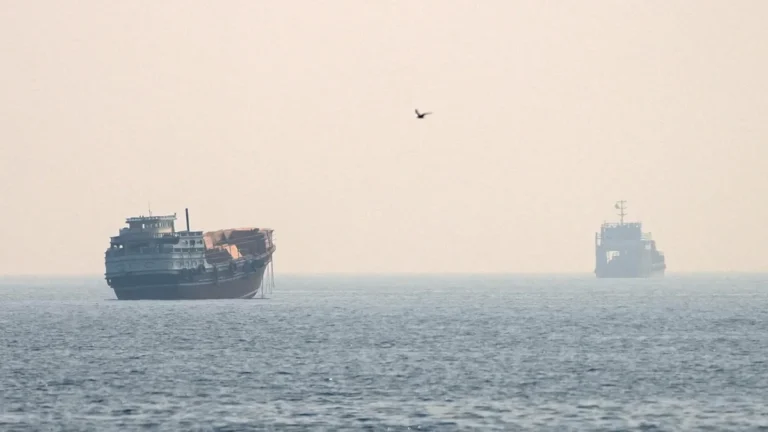
The latest confrontation follows a series of attacks earlier this week on three commercial oil tankers operating near the Strait of Hormuz, incidents that sparked an ongoing cycle of retaliatory military strikes between Washington and Tehran.
Earlier on Sunday, Iranian state media reported that authorities had suspended navigation through the Strait of Hormuz after Iranian forces fired a naval cruise missile at a vessel accused of traveling along an unauthorized route.
According to the state-run news agency, the IRGC said the ship was struck with warning fire and forced to stop after allegedly ignoring repeated instructions.
The Guards also warned that any U.S. military response to the closure of the strait would be met with what it described as a severe retaliation, adding that additional American military facilities across the region could become targets.
Iranian Parliament Speaker Mohammad Bagher Ghalibaf, who also serves as Tehran’s chief negotiator in talks with the United States, signaled a tougher negotiating stance in a post on X.
“The era of one-sided deals is OVER,” Ghalibaf wrote.
“We told you: keep your word or pay the price. Reality is knocking.”
The latest exchange has intensified concerns about the stability of one of the world’s most important maritime trade routes, through which a significant share of global oil and natural gas shipments normally passes, while raising fresh doubts about prospects for restoring a broader diplomatic agreement between the United States and Iran.