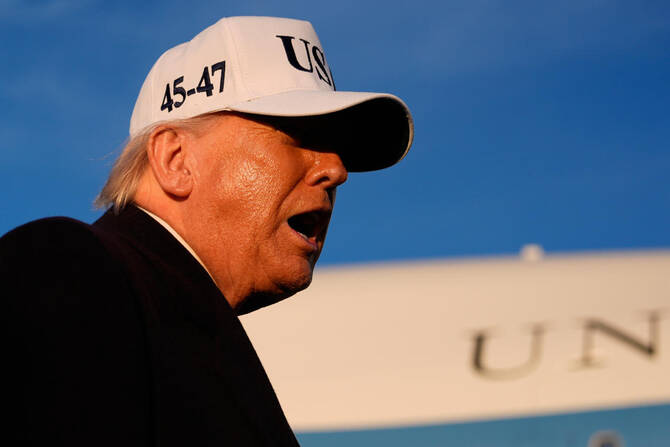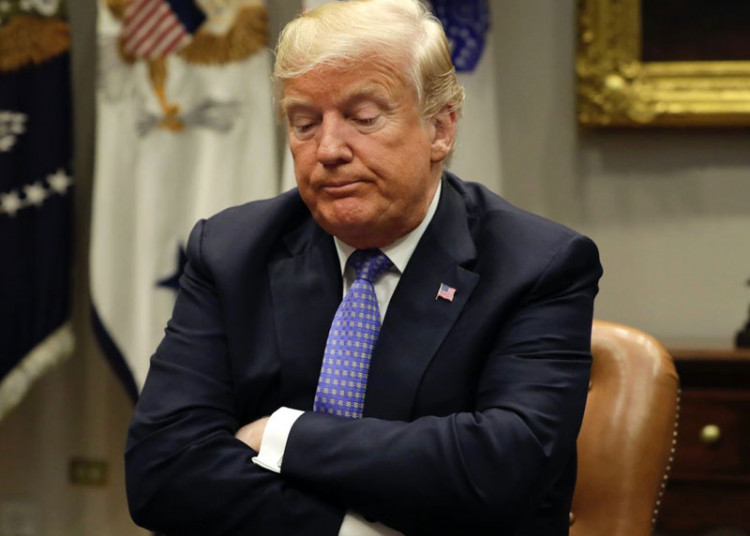
The simple question posed by Donald Trump’s second impeachment trial that begins Tuesday is whether a president who loses reelection can get away with a violent coup attempt in a desperate bid to stay in power.
The answer contained in the former commander-in-chief’s likely acquittal for inciting a deadly mob assault on the Capitol will echo through generations and may influence the outcome of some unknowable future test of US democracy.
But more contemporary concerns that do not depend on the verdict of the Senate trial — like the consistent cowardice of Republicans who refuse to hold Trump to account and the effect of the evidence on the American public — are also hugely consequential since they will shape the modern political age.
Events of the next week or so will inform the country’s capacity to move on from a traumatic presidency that left it as divided as at any time since the Civil War. And the unpredictable partisan fallout unleashed by a trial unfolding inside an eight-foot high fence around the Capitol amid fears of more violence will have a direct effect on President Joe Biden’s hopes of mustering the national will needed to conquer multiple crises.
The trial will begin just a month after a now infamous day, when Trump greeted a huge crowd in Washington already primed for revolt by his weeks of false claims of election fraud. The subsequent invasion of the US Capitol during a joint session of Congress to certify Biden’s election victory led to five deaths and saw Trump fans parading unimpeded through the halls of the iconic building as lawmakers fled to safety.
By arguing that the trial is unconstitutional, politically motivated and an infringement of his free speech rights,Trump’s defense will resurface a core theme of his tenure that a president is all-powerful and immune from censure for anti-democratic behavior rooted in a volcanic, autocratic temperament.
A majority of Senate Republicans have indicated that they will not wrestle with Trump’s behavior but will take refuge in a questionable argument that a President who was impeached while in office for seditious behavior cannot be tried after returning to private life.
That means there is a little chance of a two-thirds majority to convict Trump among 100 senators who will serve as jurors in the chamber that became a crime scene to which many of them were witnesses.
But Democratic House impeachment managers will argue that if whipping up a rebellion against the peaceful transfer of US power is not an impeachable offense, nothing is. The prosecution case will unveil evidence of the horror unfolding in the Capitol that will make clear that the US political system was forced right to the brink.
While the managers will likely fail to secure a prohibition on Trump serving in federal office in future, they hope to so damn him in public perception that a political comeback in 2024 will be impossible.
Video of Trump declaring to an angry crowd he had called t Washington on January 6 “if you don’t fight like hell, we are not going to have a country anymore,” followed by clips of rioters shouting “fight for Trump” as they smashed their way into the Capitol will have a powerful effect. They will also make uncomfortable viewing for GOP senators who spent four years ignoring Trump’s lawless conduct for their own political preservation.
The price to be paid for deserting an ex-president who still dominates his party is being demonstrated by the backlash directed at 10 Republicans who voted to impeach in the House.
CNN