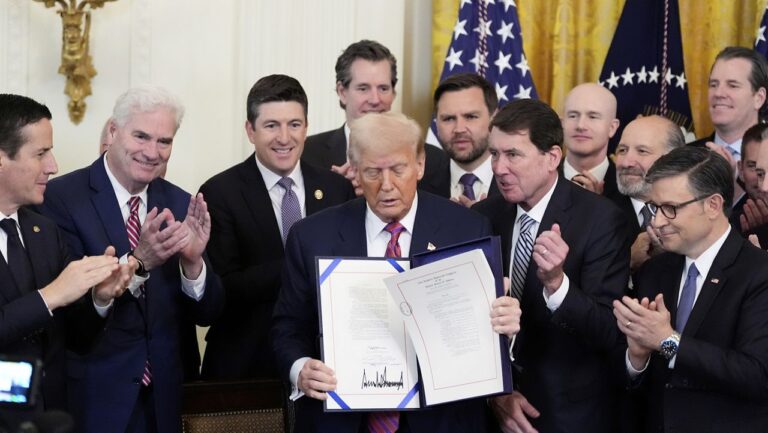
President Donald Trump on Friday signed into law the first major piece of federal legislation regulating cryptocurrency, marking a significant milestone for an industry the Trump family has increasingly embraced and promoted.
The bill, known as the GENIUS Act, received bipartisan support in the House on Thursday after clearing the Senate last month. A top priority for the Trump administration, the law sets out clear regulatory guidelines for stablecoins—a type of cryptocurrency pegged to stable assets like the U.S. dollar—aimed at making them more accessible, trusted, and mainstream.
Trump, once a vocal critic of digital currencies, has in recent years rebranded himself as a champion of crypto innovation. On the campaign trail and in office, he has positioned himself as the most crypto-friendly president in U.S. history. Earlier this year, Trump launched his own crypto meme coin and has since referred to the sector as “a very powerful industry” in which the United States has “led the world.”
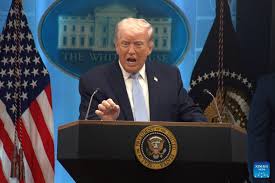
“I pledged to restore American liberty and leadership—and to make the United States the crypto capital of the world. That’s exactly what we’ve done,” Trump said during the signing ceremony at the White House.
Stablecoins are designed to offer the benefits of digital currencies—speed and decentralization—while maintaining price stability by being tied to assets like the U.S. dollar. Under the GENIUS Act, banks and financial institutions will find it easier to issue and manage stablecoins, which advocates say will build public trust and help expand the overall crypto economy.
The legislation comes after years of congressional debate over how to regulate digital assets. Buyers typically use personal bank accounts to purchase stablecoins, which are then used to trade in more volatile cryptocurrencies like Bitcoin or Ethereum.
“Our years of diligent work in Congress to bring clarity to payment stablecoins have reached a historic turning point,” said Rep. French Hill (R-AR), chairman of the House Financial Services Committee. “President Trump called on Congress to send landmark legislation to his desk by August, and we have delivered.”
The bill passed after a brief internal dispute among House Republicans, which delayed debate for nine hours before a vote could be held.
While many Democrats, including several House leaders, supported the bill, some raised red flags over potential conflicts of interest. Critics voiced concern that the legislation does not prevent public officials from promoting their own cryptocurrency ventures or profiting from anonymous digital transactions.
Rep. Maxine Waters (D-CA), the ranking Democrat on the Financial Services Committee, criticized the bill, pointing to a company recently linked to the Trump family that launched its own stablecoin. She warned the legislation could pave the way for political figures to benefit personally from increased adoption of digital currencies.
Still, with the GENIUS Act now law, the U.S. enters a new era of cryptocurrency regulation—one with major implications for financial markets, federal oversight, and the political figures championing crypto’s future.