President Bola Tinubu has signed the Electoral Act, 2022 (Repeal and Re-Enactment) Bill 2026 into law, introducing sweeping amendments to Nigeria’s electoral framework barely a year before the 2027 general elections.
The new legislation repeals and re-enacts the 2022 Electoral Act with key adjustments following weeks of intense debate and emergency sessions in the National Assembly. The harmonised bill was passed by both chambers in mid-February 2026 after resolving differences, particularly on result transmission and election timelines.
One of the most contentious provisions — Clause 60 — retains electronic transmission of results from polling units to the Independent National Electoral Commission (INEC) Result Viewing Portal (IReV), while allowing manual transmission as a fallback in the event of network failure or technical challenges.
The hybrid model survived a Senate division vote of 55–15 in favour of keeping the manual option, amid protests and walkouts by some minority lawmakers in the House of Representatives who demanded mandatory real-time electronic uploads without exceptions.
Another significant amendment reduces the mandatory notice period for elections from 360 days to 300 days under Clause 28. The change grants INEC greater flexibility to schedule the 2027 presidential and National Assembly elections as early as late December 2026 or January 2027, potentially avoiding overlaps with the Ramadan fasting period and Lent.
Additional reforms reportedly clarify procedures for party primaries — favouring direct and consensus options while removing certain indirect mechanisms — and update penalties, timelines and procedural guidelines to address legal inconsistencies.
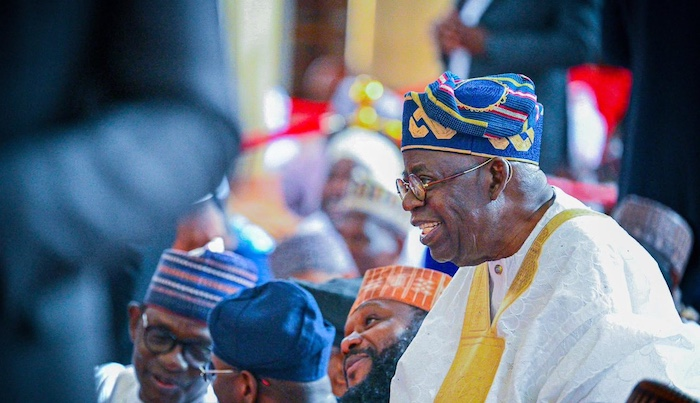
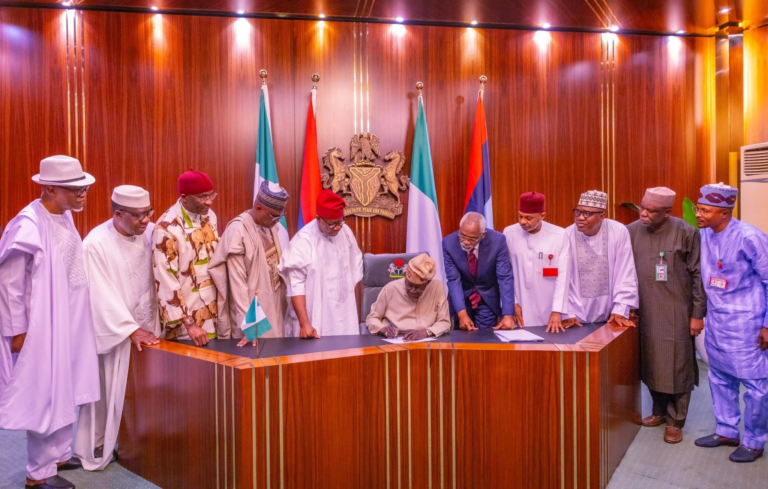
Tinubu signed the bill at the State House on Wednesday in the presence of Senate President Godswill Akpabio, Speaker of the House of Representatives Tajudeen Abbas, and Chief of Staff to the President Femi Gbajabiamila.
The President described the reform as essential to strengthening democracy and restoring public confidence in the electoral system.
“What is crucial is the fact that you manage the process to the extent there will be no confusion, no disenfranchisement of Nigerians, and that we are all going to see democracy flourish,” Tinubu said.
Addressing the debate over electronic transmission, he emphasised that final results would still be declared by human officials.
“For final results, you are not going to be talking to the computer; you are going to be talking to human beings who will announce the final results,” he stated.
Tinubu also questioned Nigeria’s broadband capacity to sustain fully real-time electronic transmission nationwide, stressing that voting, counting and collation at polling units remain manual processes.
“It’s just the arithmetic accuracy that is to enter into Form EC8A. It’s the manual, essentially. The transmission of that manual result is what we’re looking at,” he added.
The new law is expected to shape preparations for the 2027 elections as political parties intensify mobilisation nationwide.