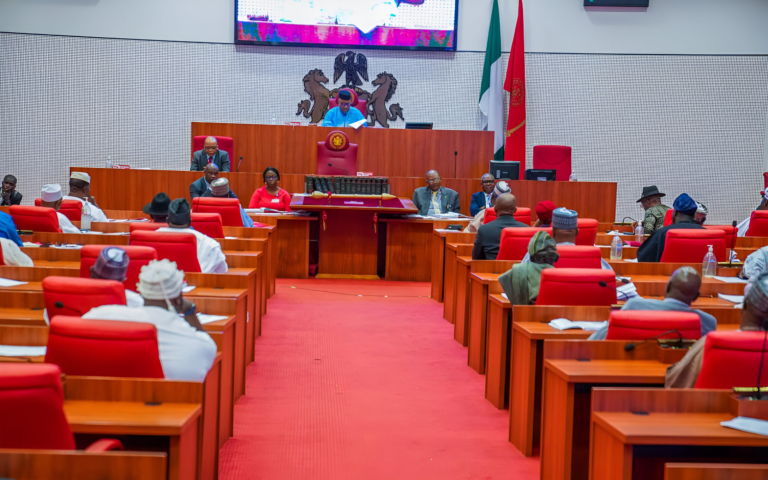
The Nigerian Senate on Tuesday passed the Electoral Act, 2022 (Repeal and Re-Enactment) Bill 2026 after a tense session marked by disagreement over electronic transmission of election results.
The disruption began when Enyinnaya Abaribe demanded a division on Clause 60(3), which outlines procedures if electronic transmission of results fails. He opposed the proviso allowing manual transmission in the event of network failure, arguing that Form EC8A should not become the sole basis for results.
Senate President Godswill Akpabio initially suggested the demand had been withdrawn, drawing objections from opposition lawmakers. Deputy Senate President Barau Jibrin cited Order 52(6), saying it would be out of order to revisit a ruled provision, sparking further uproar.
Senate Leader Opeyemi Bamidele clarified that he had sponsored a motion for rescission, meaning earlier decisions were no longer binding.
When the vote was eventually taken, 15 senators opposed the proviso, while 55 supported it, allowing the clause to stand.
Earlier concerns also centred on the election timetable announced by the Independent National Electoral Commission (INEC). Lawmakers noted that the proposed February 2027 election dates could conflict with the amended law’s requirement that polls be scheduled not later than 360 days before the expiration of tenure. Some senators warned that strict adherence could result in elections falling within the Ramadan period, potentially affecting participation and logistics.
After clause-by-clause consideration and the division vote, the Senate passed the re-enacted Electoral Act Bill 2026, advancing a major legislative reform amid continued debate over election timing and result transmission procedures.