Priti Patel had to personally approve plans to send some asylum seekers from the UK to Rwanda after her officials voiced concerns about the scheme’s value for money.
The home secretary took the rare step of issuing a “ministerial direction” to push through the scheme, meaning she takes personal responsibility for it.
It is only the second time the Home Office has used the power in 30 years.
The PCS union, which represents civil servants, called the plans “inhumane”.
Mark Serwotka, general secretary of the Public and Commercial Services Union, said: “For the government to attempt to claim this is anything other than utterly inhumane is sheer hypocrisy.
“We have already seen that they are prepared to risk lives by turning boats back in the channel – a policy which we have had to take them to court over. It is a heartless approach that displays total disregard for human life which everyone must oppose.”
A source close to the home secretary said “deterring illegal entry would create significant savings” and the fact that the savings could not be quantified precisely should not prevent action from being taken.
Ministerial directions have been used 46 times since the 2010 election, with two in the Home Office since 1990, according to the Institute for Government think tank.
The only other time the formal order was used by the Home Office was in 2019 by the former home secretary Sajid Javid, to bring in the Windrush Compensation Scheme before legislation was in place.
Under the £120m pilot scheme, people deemed to have entered the UK unlawfully since 1 January could be flown to Rwanda, where they will be allowed to apply for the right to settle in the east African country.
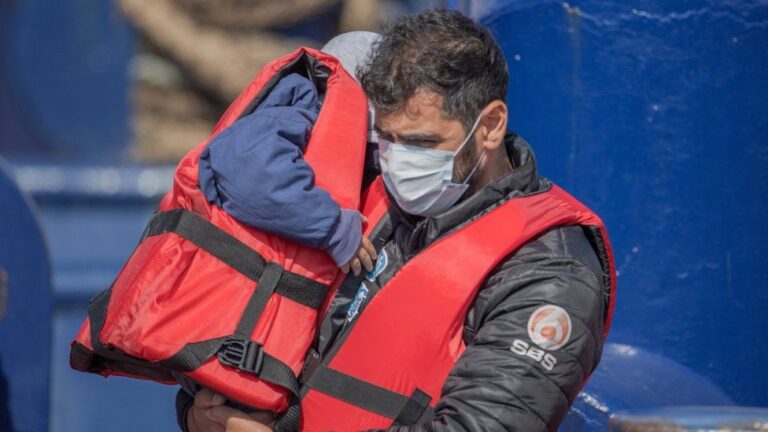
The government said the first flights could begin within weeks, initially focusing on single men who crossed the Channel in small boats or lorries.
Six boats carrying181 people crossed the Channel on Friday, according to the Ministry of Defence. No-one making the journey was believed to have arrived on UK soil “on their own terms”, it added.
Last year, 28,526 people made the crossing, up from 8,404 in 2020.