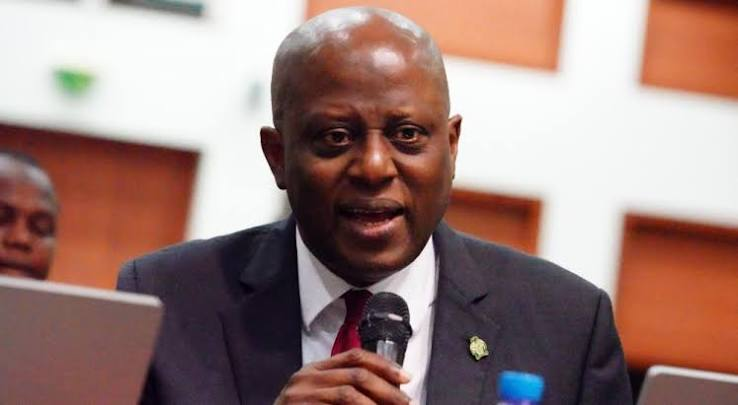
Central Bank of Nigeria (CBN) Governor Olayemi Cardoso has announced that Nigeria’s gross foreign exchange (FX) reserves have crossed $55 billion, describing it as the highest level recorded in more than 18 years.
Cardoso disclosed this on Tuesday after the Monetary Policy Committee (MPC) meeting in Abuja, attributing the increase to consistency and discipline in the CBN’s approach.
“We have been able to rebuild our reserves. And the whole conversation around rebuilding the reserves, we know that today — and it was mentioned in my communique — that we are in excess of $55 billion, the highest number in over 18 years,” he said.
“That’s a big thing. It has come through consistency and discipline in approach.”
The disclosure came after the reserves reached $54.8 billion as of September 22, according to recent CBN data.
Cardoso also attributed the stronger external position partly to increased diaspora remittances, saying the CBN’s efforts to raise monthly inflows towards $1 billion had yielded results.
“As of July, it was almost there. It was almost at $1 billion,” he said.
He said the improved reserve position, alongside stronger FX liquidity and exchange-rate stability, had helped strengthen Nigeria’s economic resilience.
According to Cardoso, the CBN expects remittance inflows to continue growing, although he acknowledged that external shocks could affect the flows.
“We will continue to grow these numbers. It will continue to be important for Nigeria,” Cardoso said.
“But we also accept that it can go up, it can go down.”
The CBN governor said the bank would continue engaging Nigerians in the diaspora and encouraging them to invest in the domestic economy.
“We are not going to relent. And we believe that the future is bright for us to continue to improve on those remittances,” he said.
The development comes as the CBN continues its monetary policy adjustments. On September 22, the MPC cut the Monetary Policy Rate by 350 basis points to 23 percent at its 307th meeting, saying the decision would enhance the effectiveness of monetary policy and support the transition to an inflation-targeting framework.