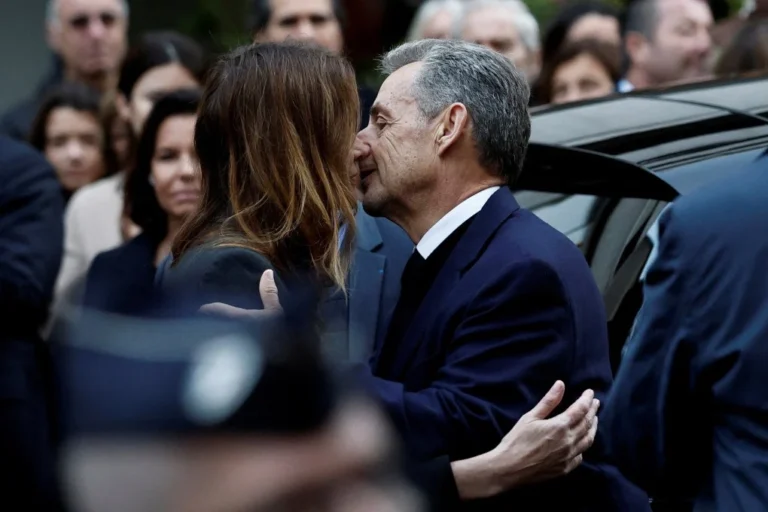
Former French President Nicolas Sarkozy returned home Monday evening after a Paris court granted his release pending appeal of his conviction for criminal conspiracy linked to alleged Libyan funding of his 2007 presidential campaign.
Sarkozy, 70, had been imprisoned on October 21, just weeks after being found guilty in September. Judges called his actions of “extraordinary seriousness,” describing his swift incarceration as a historic downfall for a former French head of state.
“Tough… Really Tough”
Speaking by video link from La Santé Prison, Sarkozy described his detention as grueling.
“It’s tough… really tough — draining, as it must be for any detainee,” he said, adding, “I’m French, sir. I love my country. I’m fighting for the truth to prevail. I will comply with all obligations imposed on me, as I always have.”
The appeals court ruled that Sarkozy did not pose a flight risk and could therefore be released under judicial supervision. His conditional freedom includes a ban on leaving France and restrictions on contacting certain justice ministry officials involved in the case.
Sarkozy, who served as president from 2007 to 2012, has repeatedly denied wrongdoing, insisting the charges are politically motivated. On social media Monday, he wrote:
“Truth will prevail… the end of the story remains to be written.”
The former president has vowed to focus on preparing his appeal, which is expected to be heard next year.
Since leaving office, Sarkozy has been embroiled in a series of legal troubles:
- In 2023, France’s highest court upheld a corruption and influence-peddling conviction, ordering him to wear an electronic monitoring tag for one year — the first such case involving a French president.
- He has also been convicted of illegal campaign financing related to his failed 2012 reelection bid, with a final ruling due later this month.
- Additionally, Sarkozy remains under investigation for alleged witness tampering tied to ongoing proceedings.
Sarkozy’s youngest son, Louis Sarkozy, celebrated his father’s release on social media, posting a childhood photo with the caption, “Vive la liberté” — “Long live freedom.”
The court’s decision marks a temporary reprieve for the embattled former leader, as he prepares to challenge verdicts that have cast a long shadow over his post-presidential career and France’s political legacy.