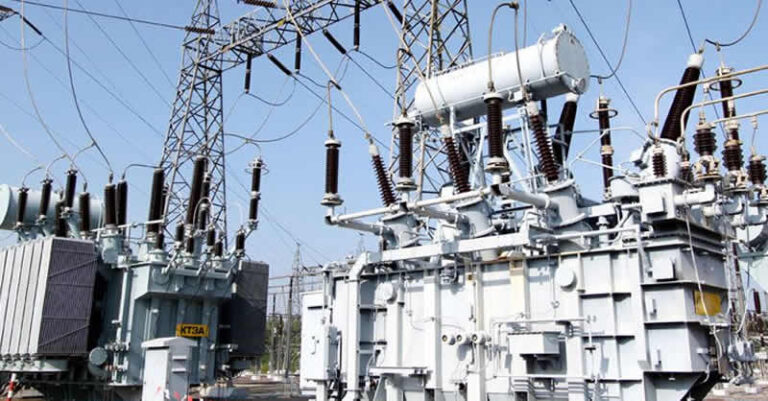
The country’s energy infrastructure has collapsed for the third time in less than a month, causing widespread blackouts.
The federal government stated to Nigerians about three weeks ago that various issues are to blame for the country’s epileptic power supply.
The Minister of Power, Abubakar Aliyu, stated after the weekly Federal Executive Council (FEC) meeting in Abuja a few weeks ago that scheduled maintenance of facilities, pipeline vandalism, and disputes over gas availability and payment for gas contracts between gas companies and power generating companies are some of the factors responsible for the nationwide poor power supply.
He however told the journalists that the issues are receiving attention.
Particularly, Aliyu disclosed that the national power grid that collapsed twice in 24 hours has been restored.
However, a statement released on Friday by the power sector, confirmed that the national grid is down again.
The Transmission Company of Nigeria, TCN had stated that its in-house engineers have deployed a stop-gap solution to improve grid monitoring and acquisition of data from remote stations (power stations and transmission substations) to the National Control Centre.
This was achieved by utilizing the Internet of Things (IoT) solution, and Virtual Private Network (VPN) by using various Internet Service Providers (ISP), the firm had noted.
It explained further that the temporary use of the Network Automation System was deployed to assist TCN in conveying critical operational measurements data from remote stations to NCC using Web Technology, which is an integral component of the IoT.
“So far, the data received from remote stations has enabled NCC to obtain more insight into the situation of the power flow on the grid and has enabled NCC to make decisions that have impacted positively on the security and integrity of the Grid,” the statement said.
It added: “The stop-gap solution became necessary as TCN could not access and receive comprehensive operational data of the entire power grid for managing the fast-growing system.
“The existing inadequate SCADA System cannot provide adequate grid visibility, as parts of the existing SCADA system are moribund and damaged, coupled with an ineffective telecommunication network infrastructure.
“The fact that several stations were never integrated into the existing SCADA at all, and made grid visibility and management very difficult and inefficient”.