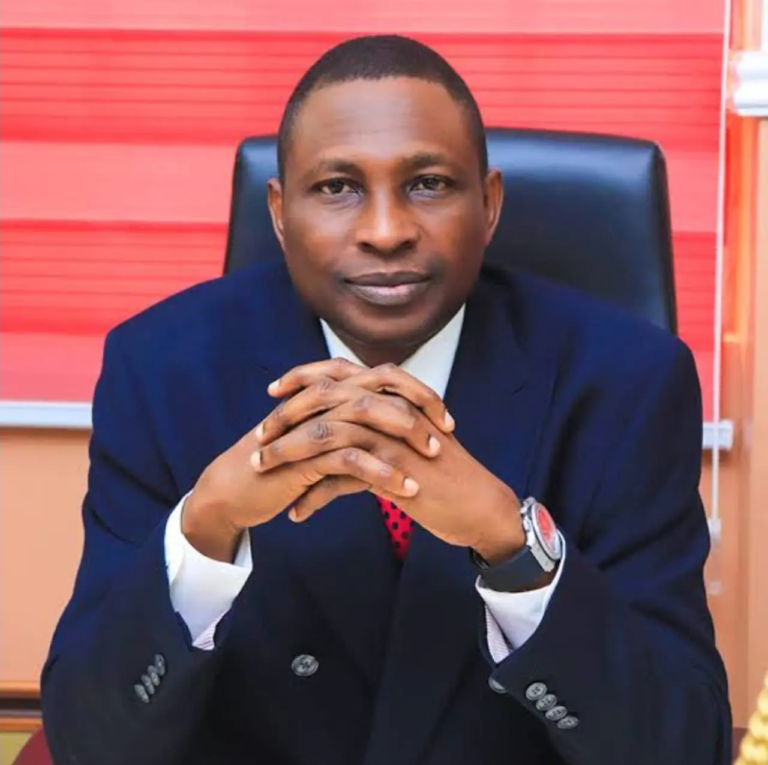
The Executive Chairman of the Economic and Financial Crimes Commission (EFCC), Mr. Ola Olukoyede, has issued a strong warning against the abuse of the naira, declaring that acts such as spraying and stamping on the national currency are not cultural practices but punishable offences.
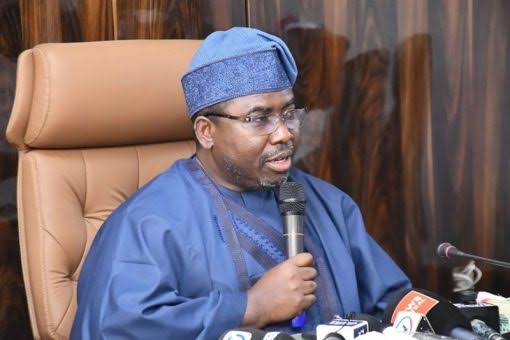
Speaking on Friday during a stakeholders’ sensitisation programme held at the Colonades Hotel in Ikoyi, Lagos, Olukoyede described the naira as “a symbol of our sovereignty” and expressed deep concern over the widespread abuse of the currency at social events.
“Nobody who works hard to earn money will go out and start throwing their hard-earned salary in the air,” he said, condemning the practices of spraying, mutilating, and stamping on naira notes at public functions.
He revealed that in collaboration with the Central Bank of Nigeria (CBN), the EFCC has set up a ‘Task Force on Dollarisation and Naira Abuse’ to tackle these violations. Dismissing claims that such acts are part of Nigerian culture, he stated emphatically, “There is nothing cultural about destroying our national currency.”
Responding to criticism that the EFCC should focus on high-profile corruption cases instead, Olukoyede maintained, “An offence is an offence. Ignorance of the law is never an excuse.” He added that the commission is already prosecuting several celebrities, stressing that no one is above the law.
On broader economic matters, the EFCC Chairman highlighted recent reforms within the agency aimed at supporting economic recovery and protecting legitimate businesses. “Unlike in the past, companies under investigation are no longer summarily shut down,” he said, noting that new procedures are designed to preserve jobs and investment.
Olukoyede also disclosed that over ₦100 billion in recovered proceeds of crime have been channeled into critical government programmes under President Bola Ahmed Tinubu’s administration. These include the Nigerian Education Loan Fund (NELFund) and the CrediCorp consumer credit scheme.
“These are not just headlines; they are real interventions funded by money recovered from corrupt individuals and organisations,” he affirmed.
He cited the recovery of funds from the Niger Delta Development Commission (NDDC), which were used to establish a skill acquisition centre and a liaison office in Bayelsa State. In Kaduna, he said, a property seized from a former civil servant now serves as the Federal University of Applied Sciences, Kachia.
Olukoyede further disclosed that the EFCC is collaborating with foreign governments to repatriate stolen funds and has successfully returned money to fraud victims in the United States, Spain, and Canada.
A startling revelation from the event was the operation of international fraud syndicates within Nigeria. According to Olukoyede, sting operations in Lagos and Abuja resulted in the arrest of 792 suspects, with many linked to foreign criminal networks. He noted that over 150 of those prosecuted are Chinese nationals.
He added that under his leadership, the commission is currently prosecuting four former governors and three former ministers for various corruption-related offences.
To strengthen prevention, the EFCC has established a new Department of Fraud Risk Assessment and Control (FRAC). The commission is also deepening public engagement through EFCC Radio 97.3FM and weekly sensitisation efforts via radio, television, and X Spaces (formerly Twitter).
“We all must lend our voices to this national campaign to restore the integrity of the naira. This fight is not for EFCC alone; it is a collective duty,” Olukoyede urged.