Myanmar’s military-backed party won the country’s election, according to final official results released Wednesday, as the army chief moved to secure continued influence through the creation of a new advisory body outside the formal government structure.
The Union Solidarity and Development Party (USDP), led largely by former generals, claimed victory in a vote that had been widely expected to favor the military establishment. Major opposition parties were barred from participating, dissent was tightly restricted, and the constitution guarantees the armed forces 25% of parliamentary seats, effectively ensuring dominance by the military and its allies.
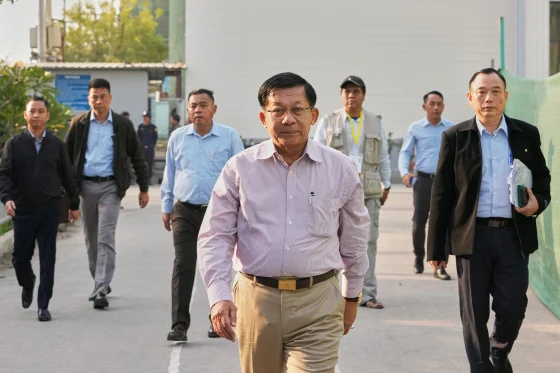
Senior Gen. Min Aung Hlaing, who leads the ruling junta, had been widely expected to become president once the new Parliament convenes. However, the constitution prohibits a president from simultaneously serving as commander-in-chief — the country’s most powerful position — raising uncertainty over whether he would be willing to relinquish military control.
That question was sharpened Wednesday when Min Aung Hlaing signed a law establishing a new Union Consultative Council, a body that could allow its chairman to exercise significant influence without formally heading the government. The legislation was published in the state-run Myanma Alinn newspaper.
Under the law, the president may form the council with at least five members, including a chair. The body would be empowered to advise and coordinate on national security, foreign relations, peace negotiations and legislation, while technically leaving executive and judicial authority intact.
The move mirrors the military’s broader strategy since seizing power in 2021 from the elected government of Aung San Suu Kyi, a takeover that plunged Myanmar into mass protests, armed resistance and an ongoing civil war. The junta has frequently relied on parallel institutions to consolidate control while maintaining a façade of civilian governance.
It remains unclear whether Min Aung Hlaing intends to chair the new council. Its announcement coincided with the release of Myanmar’s first election results in five years.
Voting was held in three phases between December and January across 263 of the country’s 330 townships. Roughly one-fifth of constituencies did not vote due to active fighting.
Final figures from the Union Election Commission show the USDP winning 339 of the 586 seats in the national parliament. Combined with the 166 seats automatically reserved for the military, the armed forces and their political allies now control about 86% of the legislature. The remaining seats were split among 21 smaller parties, each winning between one and 20 seats.