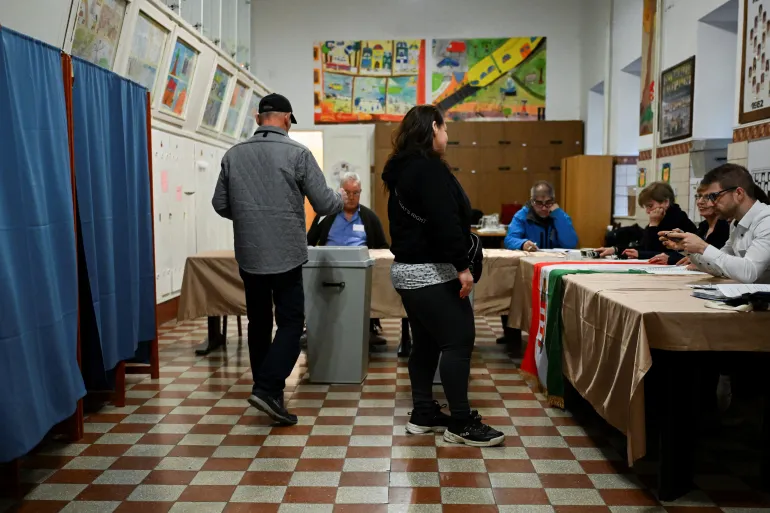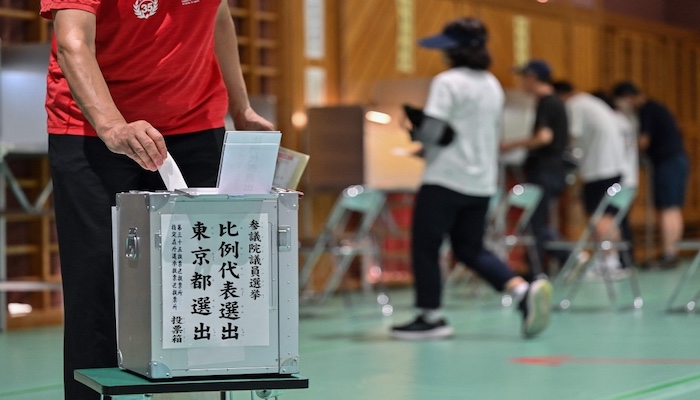
Japanese voters headed to the polls on Sunday in a high-stakes upper house election that could deal a serious blow to Prime Minister Shigeru Ishiba’s political standing, with rising inflation and concerns over immigration emerging as central issues for the electorate.
Pre-election opinion polls suggest the ruling Liberal Democratic Party (LDP) and its junior coalition partner, Komeito, may struggle to secure the 50 seats needed to maintain their majority in the 248-seat upper house, where 124 seats are being contested.
Opposition parties—particularly those advocating tax cuts and expanded public spending—appear poised to make gains. Among them is the nationalist Sanseito party, which has gained traction with its hardline stance against immigration, skepticism of foreign investment, and vocal opposition to recent gender equality initiatives.
“I’m attending graduate school, but I’m surrounded by foreigners—there are hardly any Japanese students,” said 25-year-old Yu Nagai, who cast his ballot for Sanseito. “When I see the benefits and compensation offered to foreigners, I feel like Japanese people are being overlooked.”
Polling stations are set to close at 8 p.m. local time (1100 GMT), with media outlets expected to release preliminary projections based on exit polling shortly thereafter.
Analysts warn that a poor showing for the ruling coalition could unsettle financial markets, stall critical trade negotiations with the United States, and weaken Ishiba’s leadership. Japan faces an August 1 deadline to finalize a trade agreement with Washington or risk facing new tariffs from its largest export partner.
The timing is especially precarious as inflation continues to squeeze Japanese households. Rice prices have doubled over the past year, intensifying public pressure on the government to provide economic relief—even as it insists on maintaining fiscal discipline.
The LDP has so far resisted opposition demands for broad tax cuts and increased social spending, citing risks to financial stability and bond market volatility.
A weakened mandate could complicate Ishiba’s ability to push through key legislative priorities and further inflame political uncertainty at a time of mounting economic and diplomatic pressure.