Japan’s Cabinet on Friday approved a record defense budget plan exceeding 9 trillion yen (about $58 billion) for the coming fiscal year, a move aimed at strengthening the country’s strike-back capabilities, coastal defenses, and unmanned weapons systems as regional security tensions intensify.
The draft budget for fiscal year 2026, which begins in April, represents a 9.4% increase from 2025 spending and marks the fourth year of Japan’s five-year effort to double defense expenditures to 2% of gross domestic product.
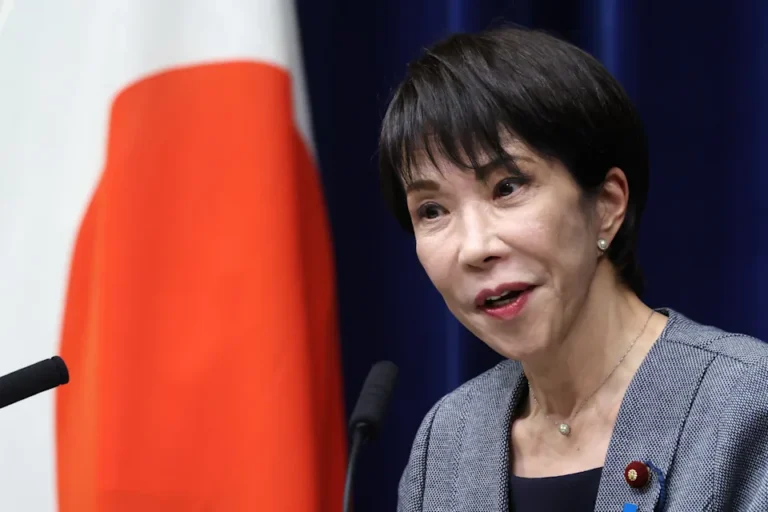
The increase comes amid heightened tensions with China. Prime Minister Sanae Takaichi said in November that Japan’s military could become involved if China were to take action against Taiwan, which Beijing claims as its own. Under pressure from the United States to strengthen its military posture, Takaichi’s government has pledged to reach the 2% GDP target by March—two years ahead of schedule—and to revise Japan’s security and defense policies by December 2026.
Japan has increasingly invested in long-range strike capabilities, including cruise missiles designed to hit enemy targets from a distance, representing a significant shift from its post-World War II policy of strictly defensive military use. The country’s 2022 security strategy identified China as its most significant strategic challenge and called for a more assertive role for the Japan Self-Defense Forces under Japan’s alliance with the United States.
Under the new plan, more than 970 billion yen ($6.2 billion) will be allocated to bolster “standoff” missile capabilities. This includes 177 billion yen ($1.13 billion) for the purchase of upgraded, domestically produced Type-12 surface-to-ship missiles with an extended range of roughly 1,000 kilometers (620 miles). The first batch of the missiles is set to be deployed in Kumamoto Prefecture by March, a year earlier than originally scheduled.
Citing an aging population and persistent recruitment challenges, Japanese defense officials said unmanned systems will play a growing role in national defense. About 100 billion yen ($640 million) has been earmarked for deploying large numbers of unmanned aerial, surface, and underwater drones for coastal surveillance and defense under a program known as SHIELD, expected to be operational by March 2028. Japan plans to rely initially on imported systems, potentially from Turkey or Israel, to accelerate deployment.
The budget decision follows a series of recent confrontations with China. Tensions escalated this month after Chinese aircraft carrier drills near southwestern Japan prompted protests from Tokyo, which said Chinese aircraft locked radar on Japanese planes—an action widely viewed as a precursor to missile targeting. Japan’s Defense Ministry, already concerned about China’s expanding Pacific operations, plans to establish a new office dedicated to monitoring and analyzing Beijing’s military activities.
In June, two Chinese aircraft carriers were observed operating simultaneously near Iwo Jima for the first time, further heightening Japanese concerns over China’s growing military reach beyond the East China Sea.
China’s Foreign Ministry criticized Tokyo’s actions, with spokesperson Lin Jian accusing the Takaichi government of accelerating military expansion and straying from Japan’s long-standing commitment to peaceful development.
Japan is also seeking to strengthen its domestic defense industry by expanding joint development projects with allied nations and promoting arms exports after easing restrictions in recent years. For fiscal 2026, Tokyo plans to spend more than 160 billion yen ($1 billion) on the joint development of a next-generation fighter jet with Britain and Italy, with deployment targeted for 2035. Research is also underway on artificial intelligence–operated drones designed to operate alongside the aircraft.
In a boost for Japan’s defense industry, Mitsubishi Heavy Industries was selected by Australia in August to upgrade the Mogami-class frigate to replace its aging ANZAC-class fleet. Nearly 10 billion yen ($64 million) in the new budget is dedicated to supporting the defense industrial base and overseas arms sales.
The defense budget must still receive parliamentary approval by March as part of Japan’s broader 122.3 trillion yen ($784 billion) national budget. If fully implemented, Japan’s five-year defense buildup would push annual military spending to roughly 10 trillion yen ($64 billion), making it the world’s third-largest defense spender after the United States and China.
The government plans to fund the increase through higher corporate and tobacco taxes, along with a planned income tax hike starting in 2027. Officials have acknowledged, however, that sustaining defense spending at an even higher share of GDP beyond current targets remains uncertain.