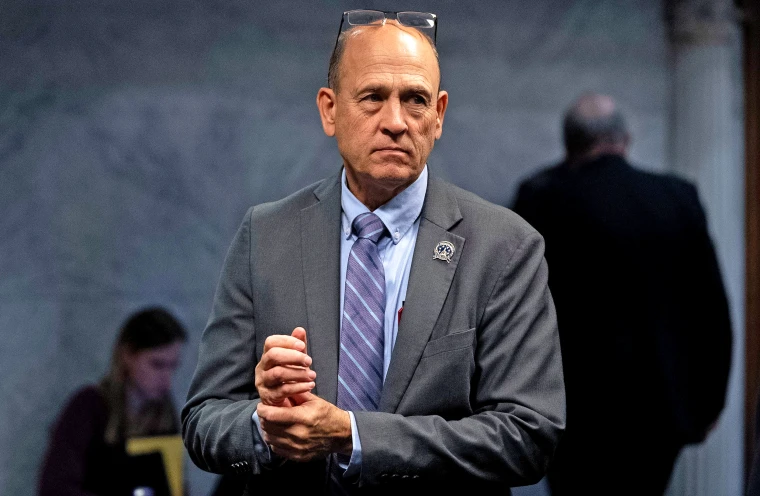
An Indiana state senator is advancing a proposal he says could dramatically reduce poverty by reshaping what students learn in public schools.
Last month, Republican Sen. Spencer Deery urged lawmakers to require schools to teach students the importance of marrying before having children, arguing the lesson could have a profound impact on their future economic well-being.
“The chance of them being poor is almost zero,” Deery told fellow legislators. From an anti-poverty perspective, he added, the idea could be “the single most important thing we could be teaching.”
Deery is championing what conservatives call the “success sequence,” a three-step framework meant to increase financial stability. The formula encourages young people to first earn at least a high school diploma, then secure full-time employment, and finally marry before having children.
Supporters often cite research from the American Enterprise Institute and the Institute for Family Studies, which found that 97% of millennials who followed those steps avoided poverty by their early 30s. The studies also suggest that having children before marriage significantly increases the likelihood of lower income.
“Some anti-poverty efforts are well-intentioned but not always effective,” Deery said in a phone interview. “This is worth trying, and it costs very little, if anything at all.”
Critics, however, argue the success sequence oversimplifies complex social and economic realities. They say the research behind it is selective, fails to fully account for racial and structural inequalities, and risks stigmatizing students from single-parent families.
Matt Bruenig, founder of the progressive People’s Policy Project think tank, said the framework shifts responsibility for poverty onto individuals rather than examining broader policy failures.
“If you’re conservative, you don’t want to expand public benefits,” Bruenig said. “So you need another narrative — that poverty exists because people won’t follow a few simple steps.”
The success sequence first appeared nearly 20 years ago in a report by the National Campaign to Prevent Teen Pregnancy and gained wider attention in 2009 after being promoted by the Brookings Institution. More recently, it has been embraced by conservative groups such as the Heritage Foundation and incorporated into model legislation aligned with the Republican policy blueprint known as Project 2025.
Several states have already acted. Utah passed a resolution in 2024 encouraging schools to teach the success sequence, while Alabama and Tennessee approved laws in 2025 requiring it to be included in curricula starting in the 2026–27 school year. Similar bills have been introduced in Ohio, Kentucky, Mississippi and Texas.
Indiana’s proposal, Senate Bill 88, passed the state Senate last week by a 39–9 vote, with opposition coming entirely from Democrats. The measure is expected to be taken up by the state House as early as next week.