Former Minister of Works and Housing, Babatunde Fashola, has dismissed calls for full autonomy for Nigeria’s local governments, arguing that the 1999 Constitution does not support such an arrangement. According to Fashola, local governments were designed to operate under state supervision, not as independent entities.
Speaking during an interview on Channels Television, the former Lagos State governor described the popular expectation of local government autonomy as “unrealistic” when closely examined through the lens of constitutional provisions.
“That is my view after a very, very close reading of certain provisions of the constitution,” Fashola said. “Some of those provisions provide, for example, that local government in its economic activities and all of that will have laws made for it by the state house of assembly.”
He argued that true autonomy implies the absence of external control, a condition contradicted by the fact that state legislatures are empowered to pass laws regulating local governments. This oversight, he insisted, reflects a constitutional design rather than an anomaly.
Citing land ownership as another significant constraint, Fashola noted that virtually all local government responsibilities such as slaughterhouses, cemeteries, primary schools, healthcare, roads, and advertising are tied to land, which remains under the control of state governments.
“To the extent that the state government controls land, which affects how the local governments will carry out these functions, I didn’t think that autonomy was intended,” he explained.
While acknowledging that the structure can be reformed, Fashola stressed that substantial constitutional amendments would be necessary to allow for true local government independence, particularly in areas such as land rights and legislative authority.
Reflecting on the past, Fashola recalled that prior to Nigeria’s return to democratic governance in 1999, local governments received their funds directly from the federation account. However, this model, he said, failed to deliver results.
“Up to 1999, local governments used to collect their monies directly from the federation account… But in the advent of the democratic era, it was found out that not a few of them had defaulted in the very basic obligation of paying staff salaries,” he said. “There was a backlog of debt, and I met some of that debt when I became governor.”
He concluded that the constitution envisions a relationship of “collaboration, supervision, or oversight” between state and local governments not autonomy.
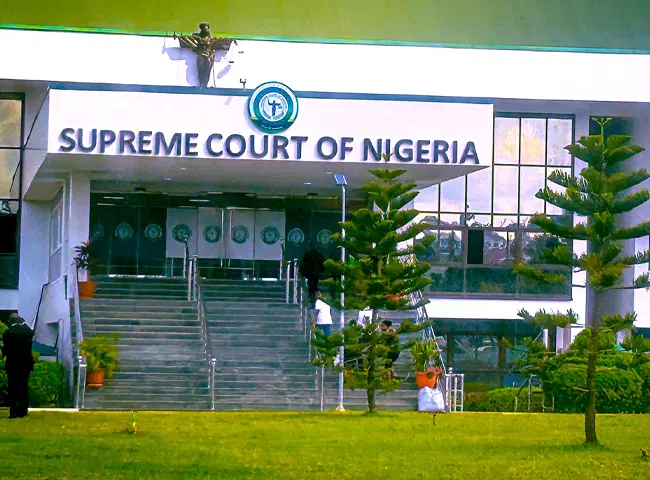
Fashola’s remarks come shortly after the Supreme Court’s landmark ruling of July 11, 2024, which directed that local government allocations be paid directly from the federation account, effectively dismantling state control over council finances. Until the ruling, funds were administered through a joint state-local government account, granting governors significant influence over local councils.
The federal government, in its suit against the governors, had argued that the constitution recognises federal, state, and local governments as three distinct tiers, all entitled to direct funding from the federation account.