A controversial migrant detention facility known as “Alligator Alcatraz,” located deep in the Florida Everglades, is facing potential shutdown over alleged environmental violations, as a federal judge prepares to hold a critical hearing on Wednesday.
The facility, hastily built on the grounds of the Dade-Collier Training and Transition Airport—an abandoned piece of tarmac west of Miami—has come under fire for allegedly bypassing legally required environmental impact assessments. The sprawling complex, designed to hold over 3,000 detainees, is adjacent to protected lands including the Big Cypress National Preserve and sensitive tribal territory belonging to the Miccosukee Indian Tribe.
Environmental groups and the Miccosukee Tribe have sued the federal and state governments, arguing that the facility threatens endangered species like the Florida panther, wood stork, Everglade snail kite, and Florida bonneted bat. The lawsuit also cites risks to nearby tribal lands, sacred sites, and ecosystems already under stress.
Wednesday’s evidentiary hearing, which will feature testimony from federal, state, and tribal representatives, could result in a court order halting operations until a full environmental review is conducted under the National Environmental Policy Act (NEPA). Plaintiffs argue that the detention center was constructed without the required environmental study or public consultation, in violation of federal law.
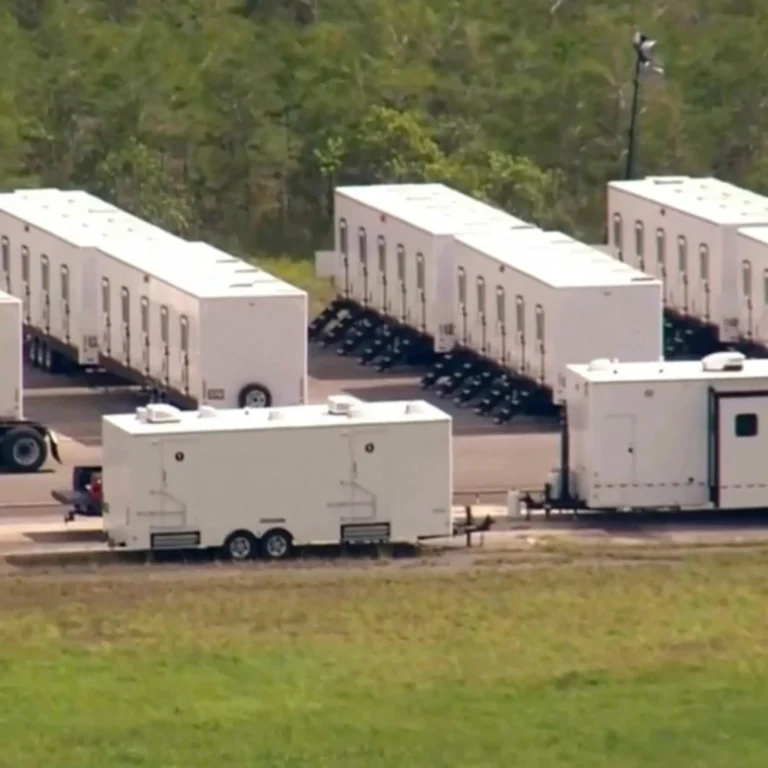
“The rushed transformation of the site into a large-scale detention facility—with trailers, diesel generators, sanitation infrastructure, and high-intensity lighting—has already altered the fragile Everglades ecosystem,” the lawsuit claims.
Originally intended in the 1960s as the site of the now-defunct “Everglades Jetport,” the location has long been a flashpoint for environmental battles. The current legal challenge draws parallels to past efforts to block development in the region, once spared by new environmental protections championed by President Nixon.
The Miccosukee Tribe joined the suit in June, warning that ongoing operations threaten the health and sanctity of tribal villages and traditional hunting grounds nearby.
In a separate but related legal proceeding, a federal judge has ordered state and federal officials to clarify by Thursday who exactly is responsible for operating the facility. Advocates argue that the government’s vague and conflicting statements are an intentional strategy to evade legal accountability and oversight.
Immigrant rights groups have also condemned conditions inside the center, citing reports of sweltering heat, spoiled food, and detainees being denied access to lawyers. Some have described the facility as a “legal black hole.”
Despite the mounting criticism, President Donald Trump has praised the detention center, calling it a model for future immigration enforcement. “They’ve got alligators for security—you don’t have to pay them,” Trump joked during a recent visit. He also announced a new partnership with Indiana to build a similar facility dubbed the “Speedway Slammer.”
Florida officials argue the center is legally compliant. Kevin Guthrie, director of the Florida Department of Emergency Management and a defendant in the lawsuit, insists the site’s prior use as an airfield exempts it from NEPA regulations. The Justice Department has similarly pushed back, claiming the plaintiffs cannot demonstrate irreparable environmental harm.
U.S. District Judge Kathleen Mary Williams, who is presiding over the case, will now decide whether to block ongoing operations at Alligator Alcatraz pending a full environmental review—a ruling that could have sweeping implications for immigration policy and environmental law.