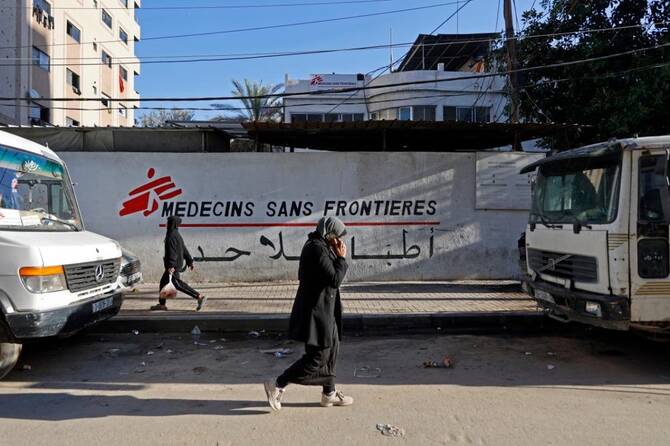
Médecins Sans Frontières (MSF) has suspended “non-critical” medical services at Nasser Hospital in southern Gaza after reports from patients and staff about the presence of armed men inside the facility and concerns over possible weapons movement on the premises.
The Geneva-based humanitarian group said the decision, which took effect on Jan. 20, was driven by worries about the hospital’s management, the protection of its neutrality and repeated security breaches. MSF indicated this is the first time an international aid organization in Gaza has publicly acknowledged reports of armed individuals inside a hospital or the potential use of such a facility to move weapons.
In recent months, patients and MSF personnel said they observed armed men — some wearing masks — within parts of the hospital compound in Khan Younis. MSF added that since a ceasefire between Israel and Hamas began in October, its teams have documented what it described as unacceptable incidents, including intimidation, arbitrary arrests of patients and suspicions of weapons transfers.
The Hamas-run Interior Ministry said it is committed to preventing any armed presence inside hospitals and warned that legal action would be taken against violators. The ministry suggested that armed members of certain families in Gaza had recently entered hospital grounds but did not specify who was involved.
Under a U.S.-backed ceasefire agreement reached in October, both Israel and Hamas pledged to halt hostilities, though each side has accused the other of breaching the truce. Gaza’s Health Ministry reports that more than 590 Palestinians have been killed by Israeli forces since the ceasefire began, while Palestinian militants have killed four Israeli soldiers during the same period.
MSF disclosed the suspension in an updated “frequently asked questions” section on its website about its operations in Gaza. The organization said the armed individuals were seen in areas where MSF does not conduct activities, but their presence nonetheless posed serious risks to patients and medical staff.
An MSF spokesperson told Reuters that the group continues to provide certain essential services at Nasser Hospital, including inpatient and surgical care for patients requiring lifesaving treatment.