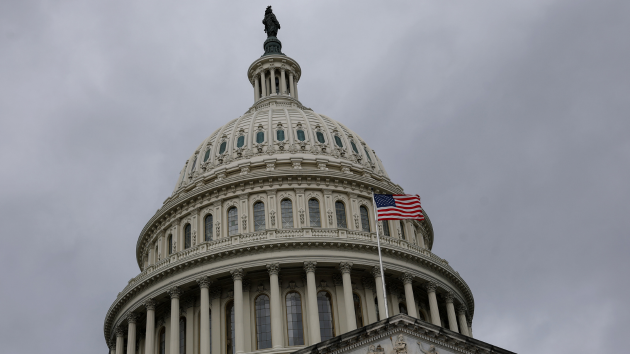
Congress remains deadlocked over negotiations to avert a shutdown of the Department of Homeland Security next week, with talks stalled as lawmakers in both chambers departed Washington for a long weekend.
Funding for DHS expires Feb. 13, and discussions have made little headway. Democrats are pressing for tighter limits on the department as part of broader funding talks, citing concerns about immigration enforcement following the deaths of two U.S. citizens during federal operations in Minneapolis.
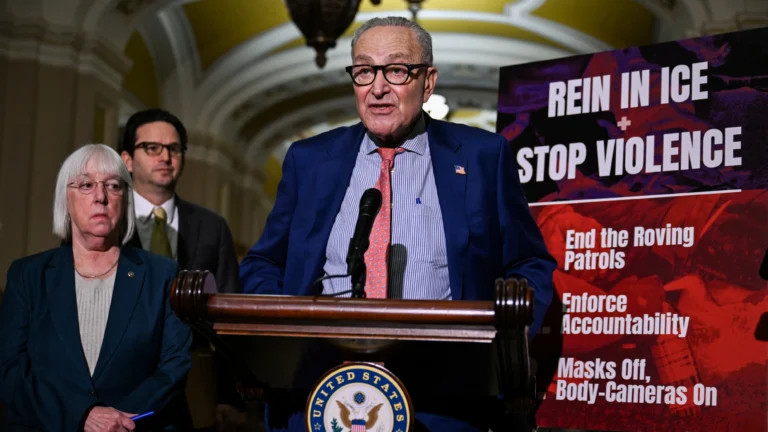
House Minority Leader Hakeem Jeffries and Senate Minority Leader Chuck Schumer on Wednesday evening outlined a list of 10 demands. Among them are requirements that immigration officers operate without masks, display identification, obtain judicial warrants for certain actions, and avoid enforcement activity at sensitive locations such as schools and churches.
Senate Majority Leader John Thune, R-S.D., quickly rejected the proposal, calling it unworkable.
“It’s totally unrealistic,” Thune said, noting that Democrats expanded their demands from three items to 10. He argued that some proposals, including forcing agents to identify themselves, could expose officers to harassment or doxxing. “There’s just a bunch of stuff in there that’s a nonstarter,” he added, though he acknowledged there may be limited room to negotiate on a few points.
Thune did not specify which proposals might be negotiable. Earlier in the week, he said Democrats’ request for a two-week extension to negotiate DHS reforms was “an impossibility.”
If lawmakers fail to reach an agreement by the deadline, DHS would partially shut down. Essential operations deemed critical by the Trump administration — including the Transportation Security Administration, the Federal Emergency Management Agency and the Coast Guard — would continue, though many employees would be furloughed without pay. Immigration and Customs Enforcement, which received $75 billion under President Donald Trump’s recently passed spending law, would not be affected by the lapse.
Republicans are also pressing their own priorities, particularly cutting off federal funds to so-called sanctuary cities that decline to cooperate with federal immigration authorities.
“We’re not going to do anything that kneecaps ICE’s ability to do their jobs,” said Sen. Eric Schmitt, R-Mo., arguing that negotiations should begin with ending sanctuary city policies.
Democrats strongly oppose that approach, contending that local cooperation policies help ensure residents feel safe reporting crimes without fear of deportation.
“Obviously, we’re having trouble figuring out the path forward,” said Sen. Chris Murphy, D-Conn., who chairs the Appropriations subcommittee overseeing DHS.
Sen. Katie Britt, R-Ala., the panel’s ranking Republican, suggested the impasse may require White House intervention. “With a week gone by, it looks like that it needs to go ahead and head to the White House now,” she said.
With just over a week remaining before funding expires, several lawmakers from both parties said direct involvement from President Trump may be necessary to break the stalemate.