Tax cuts are emerging as a central theme in Democratic politics nationwide, as candidates across the party look to address rising living costs and reconnect with working-class voters.
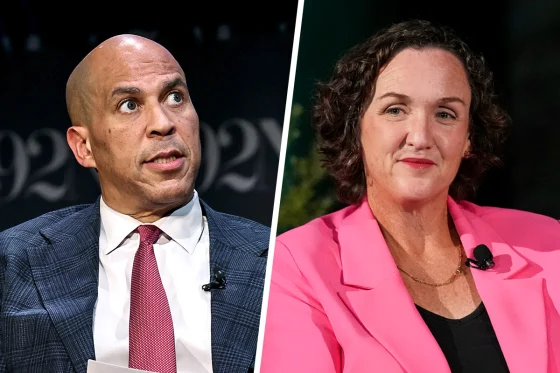
Several prominent Democrats have recently unveiled sweeping tax proposals. Senators Cory Booker of New Jersey and Chris Van Hollen of Maryland have each introduced plans aimed at reducing tax burdens for middle-income households. Booker’s proposal would exempt up to $75,000 in income for married couples from federal taxes, while Van Hollen has suggested a higher threshold of $92,000. Both lawmakers are considered potential contenders in the 2028 presidential race.
At the state level, similar ideas are gaining traction. In California, gubernatorial candidate and former congresswoman Katie Porter has proposed eliminating state income taxes for families earning up to $100,000 annually. Meanwhile, in Georgia, former Atlanta mayor and Biden administration official Keisha Lance Bottoms is campaigning on a plan to eliminate state income taxes for teachers.
The growing push for tax cuts has triggered concern among policy experts across the Democratic spectrum. Zach Moller, senior director of economic policy at the centrist group Third Way, described the debate as a “wonk revolt,” reflecting deep divisions within the party.
Moller characterized the disagreement as a “Democratic Cold War” between those advocating targeted tax relief and those favoring a broader tax base to sustain government programs.
Critics argue that reducing tax revenues could undermine efforts to fund expansive social programs often associated with European-style welfare systems. They warn that relying heavily on increased taxes for corporations and the wealthy may not generate sufficient revenue to support priorities such as child care, paid family leave, expanded child tax credits, and Medicare expansion.
“There’s only so much revenue you can get out of corporations and billionaires,” Moller said, cautioning that the current approach may fall short of meeting the party’s broader policy ambitions.