At least 22 people were killed and 63 others injured in a devastating suicide bombing at a Greek Orthodox church in Damascus on Sunday, marking one of the deadliest attacks on Christians in the Syrian capital in recent years.
The bombing occurred during evening liturgy at the Church of the Prophet Elias in the Dweila neighborhood. According to Syria’s Interior Ministry, the attacker—believed to be affiliated with the Islamic State (IS)—opened fire inside the church before detonating an explosive vest near the entrance, where dozens of worshippers had gathered.
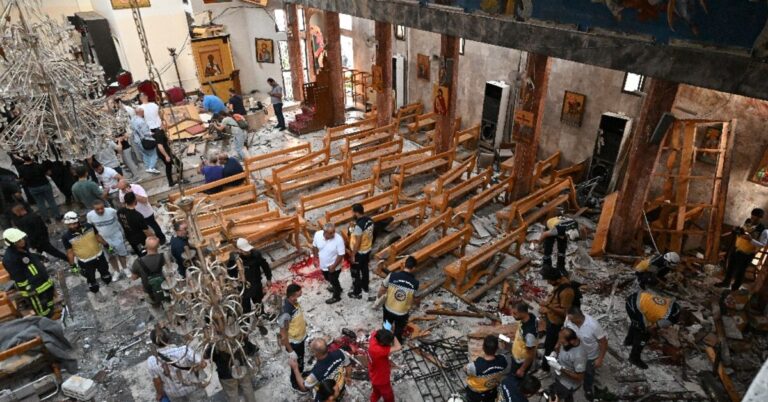
Images from the scene showed a sanctuary in ruins: broken pews scattered across bloodstained floors, and an altar charred by flames. Witnesses described a harrowing scene of chaos as the sound of gunfire gave way to a violent explosion.
“He came in firing. People tried to stop him, and then he blew himself up,” said Lawrence Maamari, a parishioner who survived the attack. Another worshipper, Ziad, recalled hearing rapid gunshots followed by an immense blast that shattered windows and hurled furniture across the church. “The explosion was so strong it felt like the walls caved in,” he said.
The attack is the first major terrorist incident in Damascus since Islamist factions ousted President Bashar al-Assad in December, ending more than a decade of civil war. Though no group has formally claimed responsibility, Syrian authorities have identified the attacker as a known IS member.
In response, the Greek Orthodox Patriarchate of Antioch issued a statement mourning the victims and condemning the assault as “a cowardly act of hatred” carried out during a moment of prayer. The Church urged Syria’s transitional government to strengthen protections for vulnerable religious communities.
The bombing has sent shockwaves through Damascus, where Christian minorities had recently begun to reemerge from years of conflict, hoping for peace. Now, many fear a resurgence of extremist violence targeting places of worship.