The Central Bank of Nigeria (CBN) has cut the Monetary Policy Rate (MPR) by 350 basis points from 26.5 per cent to 23 per cent, citing improved macroeconomic stability and the need to strengthen monetary policy transmission.
The decision was taken at the 307th meeting of the Monetary Policy Committee (MPC) in Abuja, where the 11-member committee also adjusted the Standing Facilities Corridor from +50/-450 basis points to +50/-300 basis points.
The MPC retained the Cash Reserve Requirement at 45 per cent for deposit money banks, 16 per cent for merchant banks and 75 per cent for non-Treasury Single Account public-sector deposits. The liquidity ratio also remained at 30 per cent.
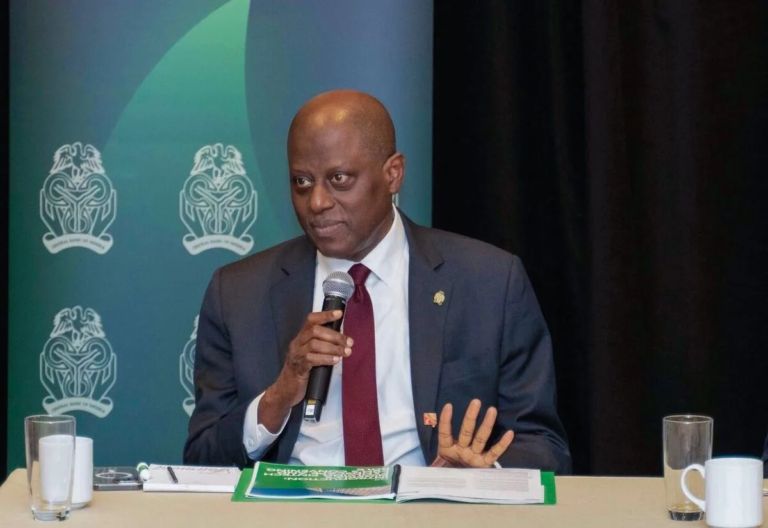
Speaking after the meeting, CBN Governor Olayemi Cardoso said the decision reflected a shift from a period of significant economic volatility to greater stability and predictability.
“Fundamentals have changed. We are at macroeconomic stability, from a situation of great volatility to one where the market is stable. We can plan. We can project,” Cardoso said.
He said the adjustment was aimed at restoring the MPR as the primary signal for monetary policy and improving the transmission of changes in the benchmark rate across the financial system.
Cardoso stressed that the cut did not amount to an abandonment of the CBN’s restrictive monetary policy stance, describing it as “an operational realignment of the monetary policy framework to strengthen transmission and support Nigeria’s transition towards an inflation-targeting system.”
“We will stay on the course which has been a restrictive one for as long as we have,” he said.
The rate cut came amid further moderation in inflation and stronger economic activity. Headline inflation fell from 15.43 per cent in July to 15.39 per cent in August, while food inflation dropped from 20.31 per cent to 19.57 per cent and core inflation from 14.97 per cent to 13.29 per cent.
Month-on-month headline inflation also slowed from 1.57 per cent in July to 0.71 per cent in August.
Meanwhile, Nigeria’s real Gross Domestic Product expanded by 4.43 per cent in the second quarter of 2026, up from 3.89 per cent in the first quarter. The non-oil sector grew by 4.31 per cent, while the oil sector expanded by 7.31 per cent.
The country’s external position also strengthened, with foreign exchange reserves reaching $55.25 billion as of September 18, 2026, the highest level in 18 years and sufficient to finance about 11.3 months of imports of goods and services.
The Nigerian equities market responded positively to the announcement, with the All-Share Index rising by 18 basis points to 250,614.66 points, while market capitalisation increased by N298 billion to N162.683 trillion.
Chief Executive Officer of the Centre for the Promotion of Private Enterprise, Muda Yusuf, described the decision as a significant turning point in the monetary policy cycle, saying it could ease financing pressures on businesses, support investment and growth, and reduce the government’s domestic debt-service burden.
Professor Uche Uwaleke of Nasarawa State University also welcomed the decision, citing moderating inflation, exchange-rate stability, improved foreign exchange liquidity and stronger external reserves.
Yusuf, however, said the impact would depend largely on how effectively commercial banks transmit the lower policy rate to borrowers.
“Lending rates on both new and existing facilities should progressively adjust downwards. Without meaningful transmission to borrowers, the impact of the policy adjustment on investment and economic growth would be limited,” he said.
Cardoso also disclosed that the CBN had conducted scenario analysis ahead of the election period to monitor potential changes in currency circulation, banking-system liquidity, monetary aggregates and foreign exchange demand.
“We will not base things on assumptions, we will carefully monitor currency in circulation, banking system liquidity, monetary aggregates, foreign exchange demand, and act accordingly,” he said.
The governor said the apex bank would remain proactive in mopping up excess liquidity when necessary and work with law-enforcement agencies to prevent currency abuse.
He linked the latest adjustment to Nigeria’s planned transition towards inflation targeting, saying the recently signed memorandum of understanding between the Ministry of Finance and the CBN would strengthen coordination between fiscal and monetary authorities.
“This is a reset and a recalibration. That is all it is,” Cardoso said.