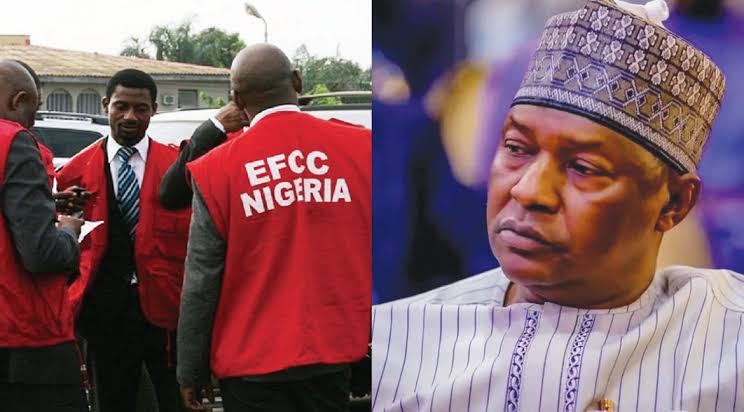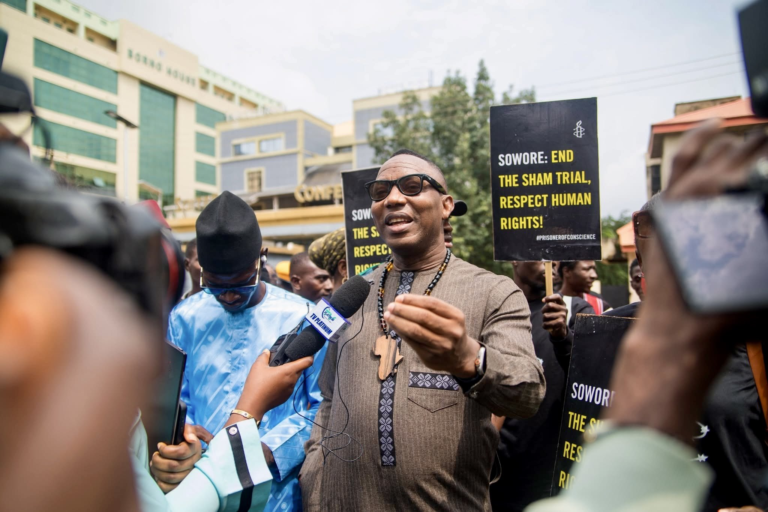
Amnesty International has strongly condemned the Department of State Services (DSS) for what it described as a brazen attempt to silence dissent, after the agency allegedly pressured X (formerly Twitter) to delete a post by human rights activist, Omoyele Sowore, that was critical of President Bola Tinubu.
The global rights watchdog said X had already notified Sowore of the DSS request, which it described as censorship and an effort to instill fear in Nigeria’s online civic space.
“The DSS targeting of Sowore’s X account is being done without any legal justification, as recognized under international human rights law,” Amnesty International posted on X.
The organisation stressed that the demand violates Nigeria’s obligations under the 1999 Constitution (as amended), the African Charter on Human and Peoples’ Rights, and the International Covenant on Civil and Political Rights, which all guarantee freedom of expression and privacy. It urged Nigerian authorities to immediately withdraw the request and stop infringing on digital rights.
“Nigerian authorities must refrain from violating human rights online, including the rights to freedom of expression and privacy, and must fulfil their constitutional and international obligations,” Amnesty International added, while also urging X not to bow to government pressure.
The dispute stems from a post Sowore made on August 25, 2025, via his verified handle @YeleSowore, where he shared a video of Tinubu during a state visit to Brazil and criticised the President’s claim that corruption in Nigeria had ended.
In a letter dated September 6, 2025, and signed by B. Bamigboye on behalf of the Director-General of the DSS, the agency described Sowore’s tweet as “false, online harassment and a wilful attempt to further an ideology.” The DSS told X.com that the post targeted the President’s official handle @officialABAT, warning it could provoke unrest among Nigerians and Tinubu’s supporters.
The letter, addressed to the Chairman and Chief Executive Officer of X.com in Bastrop Country, Texas, U.S., read in part:
“The said tweet is still in circulation and has attracted widespread condemnation by majority of Nigerians, some of whom may resort to unwholesome activities to vent their grievance over it, especially supporters of the President who have started taking to the streets in protest, thereby creating political tension and threatening the country’s national security.
“This is in addition to the disparaging effect the tweet has on the reputation of the President and the country before the comity of nations. The tweet, under reference, is against the transparency on X and the government has frowned on it and found it extremely dangerous, false, privacy violation behaviour that manipulates and negatively impacts the person of the President and the country.”
Responding to the DSS, Sowore’s legal team, led by human rights lawyer Tope Temokun, rejected the demand in a letter to X, describing it as “unlawful, unconstitutional, and without legal foundation.” Temokun argued that no administrative agency, including the DSS, has the power to censor citizens or compel private platforms to remove content, stressing that only a valid court order can justify such restrictions.
Amnesty International, in a separate statement, berated the DSS for not only seeking the deletion of Sowore’s post but also pushing for the deactivation of his account, calling the move “outrageous” and “a desperate attempt at censorship and abuse of power.”
Also weighing in, the Socio-Economic Rights and Accountability Project (SERAP) urged President Tinubu to direct the DSS to withdraw its threats against X. SERAP maintained that any restriction on online speech must meet strict standards of legality, necessity, proportionality, and legitimacy under Nigerian and international law.
It further noted that the UN Human Rights Committee has made clear that public officials are “legitimately subject to criticism and political opposition.”