The Ijaw National Congress has said it will not be able to guarantee peace in the Niger Delta over the decision of the National Assembly to retain the three percent proposed for host communities in the harmonized Petroleum Industry Bill.
The Movement for the Survival of the Ogoni People also warned that the PIB could generate conflict with host communities, urging the President, Major General Muhammadu Buhari (retd), not to sign the bill into law. But the INC lauded National Assembly members from the region who staged a walkout during the passage of the harmonized PIB on Thursday to protest against the three percent allocation.
The President of the INC, Prof. Benjamin Okaba, in a statement on Friday, said the Ijaw remained resolute on their rejection of the three percent equity share and demanded 10 percent. He said, “Since our appeal as the leadership of the Ijaw nation appears to have fallen on deaf ears, we cannot promise or guarantee that we shall be able to contain any recourse to restiveness that could arise in Ijaw land.” Okaba described the protest by the senators and House of Representatives members from the area as historic and symbolic.
He said their action was a clear message to Nigeria and the international community of the Ijaw people’s rejection of the three percent share, the “misapplication” of the meaning of host communities, and the allocation of a “whopping” 30 percent for oil exploration in the frontier basins. According to him, the walkout by the legislators further expressed the disappointment of the Ijaw people with the insensitivity of the Federal Government and multinational oil companies, although they bore the brunt of oil exploration and loss of livelihoods. Okaba said, “The Ijaw nation shall continue to condemn any policy that attempts to make what duly belongs to us as belonging to everybody and anybody without first respecting our right to own as we have at no time assumed ownership and control over what belongs to others. “We are finding it hard to calm the nerves of our people whose anger is daily worsened by the unrelenting harsh demeanor of those presiding over the fortunes of our God-given resources.
“Whereas we thought the PIB offered a veritable opportunity for the leadership (of the country) to redress and pacify our people by hearkening to our petitions and cries of marginalization and underdevelopment, the recent decision by the Senate of the Federal Republic to allocate a paltry three percent to the Host Communities Trust Fund has poured fuel on an already combustible situation. Similarly, the President of MOSOP, Fegalo Nsuke, in a statement, described the bill as unbalanced, unfair, unreasonable, discriminatory, and unrealistic. Nsuke said, “MOSOP, therefore, rejects the PIB and urges the President, Muhammadu Buhari, to return the PIB to the National Assembly for amendments before it becomes law:
“As a human rights movement, we have consistently rejected the unfair laws and military decrees which found their way into our statute books and we consider the PIB to be another addition to these discriminatory laws.“We reject the PIB as an instrument to deprive the Ogoni people and the entire Niger Delta region of the benefits derivable from its natural endowments. “MOSOP expects 25 percent allocation to host communities, we reject the three percent allocated to host communities in the PIB and consider it a part of an enslavement design to drive the oil-producing communities to death.”
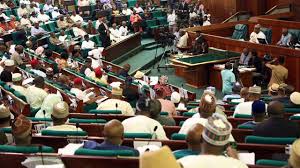
Meanwhile, the House of Representatives, on Friday, passed the PIB, adopting the three percent share of the oil revenue to the host community, as recommended by the Conference Committee of the National Assembly. The passage was, however, without the votes of members of the minority caucus. The report was laid shortly after the Minority Leader, Ndudi Elemelu, led several members of the opposition to walk out of the chamber in protest against refusal to allow an amendment to Section 52(2) of the Electoral Act (Amendment) Bill.
The report of the committee was laid, considered, and adopted, while the opposition lawmakers addressed journalists at the Press Centre on the electoral bill. The harmonized version of the PIB, on Thursday, failed to pass at the House of Representatives as consideration of the report by the conference committee on the bill caused a sharp division in the chamber.
Protests by members, especially from the southern part of the country, had forced the Speaker, Femi Gbajabiamila, to call for an emergency executive (closed-door) session, after which he asked that laying of the report by the committee be stepped down. In the original version of the executive bill, five percent was proposed as a share of the oil revenue to the host community. The Senate and the House had passed the PIB on Thursday last week, approving three percent and five percent, respectively. Both chambers had set up conference committees to harmonize the differences in the versions of the PIB.
Ada Peter