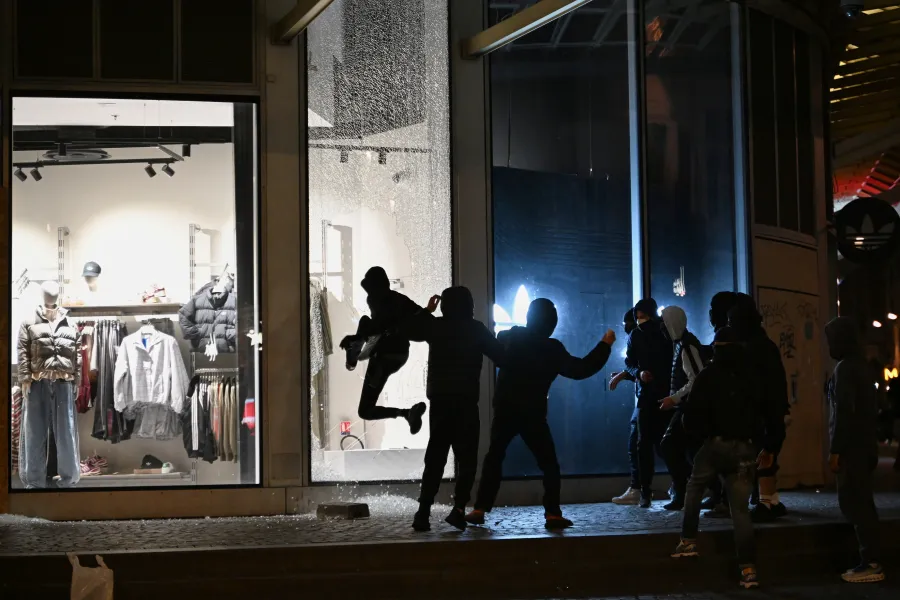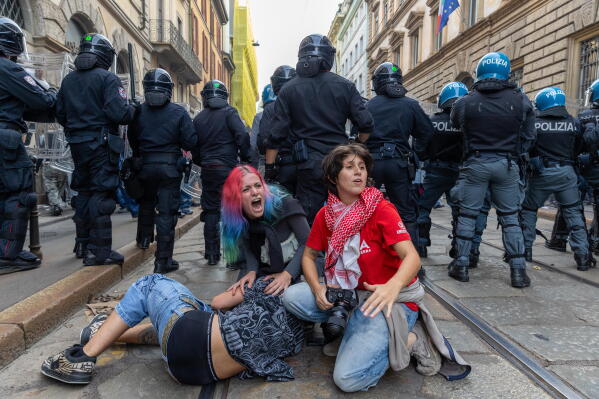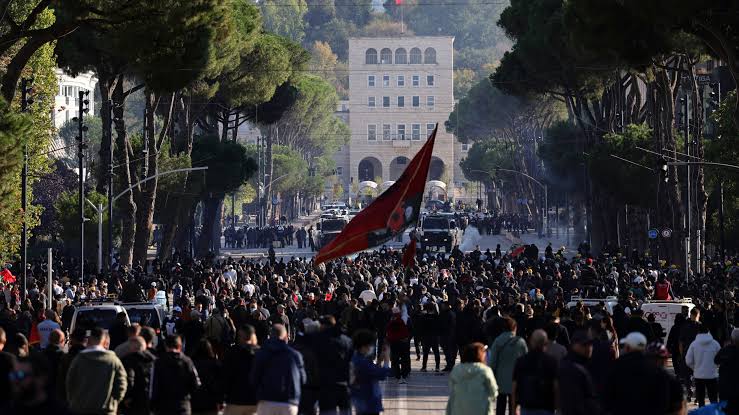
Thousands of protesters have taken to the streets in major European cities in recent weeks, with demonstrations in France, Italy and Albania occasionally escalating into violent clashes, looting and arrests.
Meanwhile, housing activists in Spain and Portugal have established protest camps to draw attention to soaring accommodation costs and the increasing difficulty of securing affordable homes.
The unrest reflects mounting economic and social pressures, particularly among younger Europeans who are struggling with financial uncertainty and concerns about their future.
María Silvestre, a sociology professor at the University of Deusto in Spain, said many young people are experiencing “a strong sense of uncertainty and a lack of control.”
She explained that growing frustration can quickly develop into mass demonstrations when economic and social pressures reach a critical point.
“And when specific situations come together, a spark suddenly ignites that is capable of channeling that discontent and driving people into the streets,” Silvestre said.
Across the continent, protesters have raised concerns about rising everyday expenses, declining educational standards, inadequate public services and a housing market increasingly beyond the reach of ordinary citizens.
In some cities, peaceful demonstrations have been overshadowed by confrontations between security forces and groups of masked agitators, resulting in injuries, property destruction and arrests.
The protests are unfolding during a politically sensitive period for Europe, with major economies, including France, Italy and Spain, approaching important elections.
At the same time, far-right political parties have gained electoral ground in Germany, with similar movements seeking to expand their influence elsewhere.
The unrest has also exposed growing divisions over immigration, economic management and government responses to public dissatisfaction.
U.S. President Donald Trump weighed in on the violence in France, blaming immigrants for the disorder.
“The migrants have taken over France. They must CLOSE THE BORDERS, FAST!” Trump wrote Monday on his Truth Social platform.
However, French police and government authorities have not attributed the violence to immigrants.
Instead, reports have identified masked agitators and other groups as participants in some of the confrontations, while the broader demonstrations have involved people from different backgrounds expressing concerns about economic and social conditions.
Beyond domestic political tensions, the protests come at a critical moment for European security and foreign policy.
European governments are facing difficult decisions over continued support for Ukraine as Russia’s war continues.
The situation has become more complicated as Trump pursues diplomatic engagement with Russian President Vladimir Putin, while Moscow faces accusations of involvement in cyberattacks, arson and other suspected sabotage operations in NATO countries.
These overlapping economic, political and security challenges are placing additional pressure on European leaders.
For many demonstrators, however, the immediate concerns remain closer to home: the rising cost of living, limited housing opportunities, strained schools and declining confidence in public institutions.
As demonstrations continue across the continent, governments face the challenge of addressing legitimate public grievances while preventing further violence and maintaining public order.
The protests underscore growing dissatisfaction among Europeans who believe their economic opportunities and quality of life are deteriorating, raising questions about how political leaders will respond to the mounting demands for change.