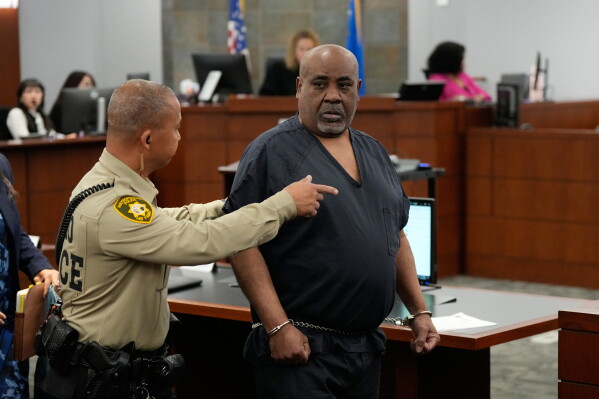
The sentence was handed down Tuesday in a Las Vegas courtroom, following Davis’ conviction in August for his involvement in the fatal drive-by shooting that claimed Shakur’s life more than 30 years ago.
The sentencing hearing featured emotional testimony from members of Shakur’s family, who described the lasting pain, personal loss and cultural impact of the rapper’s death.
Shakur’s sister, Sekyiwa Shakur, called for the maximum punishment, saying Davis should be held fully accountable for his role in the killing.
“I do believe that when you take a life like that, you deserve every minute, every minute of the maximum amount of punishment, time to sit down and contemplate what you’ve done to this world, not just to me,” she told the court.
Presiding Judge Carli Kierny emphasized that the passage of time did not diminish the seriousness of the crime or Davis’ responsibility for his actions.
The judge made clear that Davis would not escape accountability simply because the killing occurred decades earlier.
“At this time, you are going to face justice for what you did,” Kierny said.
Tupac Shakur was shot on September 7, 1996, while traveling in a vehicle near the Las Vegas Strip. The 25-year-old rapper died six days later from his injuries.
His murder became one of the most widely discussed unsolved cases in American music history, generating decades of speculation, investigations and public interest.
Davis eventually emerged as a central figure in the investigation after repeatedly discussing the events surrounding the shooting.
Over the years, he provided accounts of the killing in police interviews, television appearances and a self-published memoir.
Prosecutors argued that Davis played a leading role in organizing the attack, describing him as the “shot caller” behind the fatal shooting.
His own public statements became an important part of the case against him, as investigators examined his descriptions of what happened on the night Shakur was killed.
The conviction and sentencing represent a major development in a case that remained unresolved for decades, despite its prominence in American popular culture.
For Shakur’s family, the proceedings offered an opportunity to confront the loss of a loved one whose influence extended far beyond the music industry.
Although the sentencing brings legal accountability for Davis’ role in the murder, it does not erase the grief experienced by the rapper’s relatives and supporters.
More than three decades after his death, Tupac Shakur remains one of hip-hop’s most influential figures, remembered for his music, social commentary and enduring cultural legacy.