The International Monetary Fund (IMF) has urged Nigeria to strengthen banking supervision, maintain adequate capital and liquidity buffers, and ensure timely recognition of bad loans following the completion of its banking sector recapitalisation programme.
The Fund warned that raising capital alone would not guarantee financial stability without effective regulation, sound asset quality and prudent risk management.
The Central Bank of Nigeria (CBN) said 33 banks had met the revised minimum capital requirements by the end of the programme, raising a total of ₦4.65 trillion in new capital.
Introduced in March 2024, the exercise concluded on March 31, 2026, at the end of the two-year compliance period.
According to the CBN, domestic investors accounted for 72.55 per cent of the funds raised, while international markets contributed the remaining 27.45 per cent.
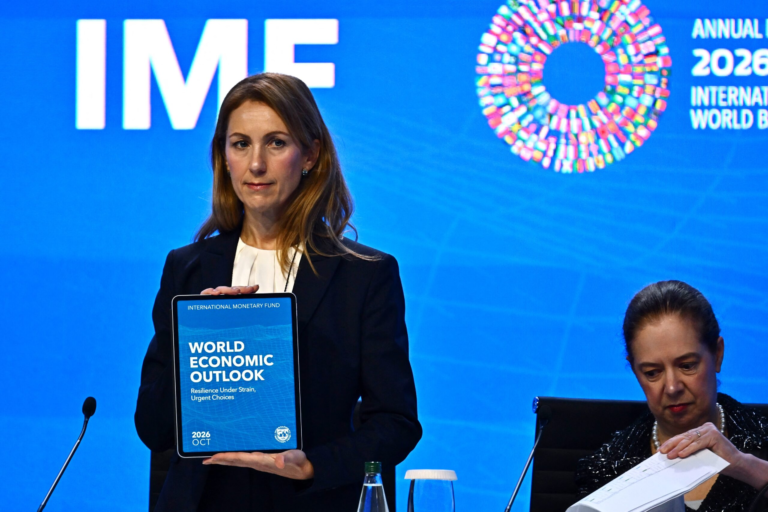
The IMF outlined its recommendations through officials of its Monetary and Capital Markets Department during a media briefing on Nigeria, Africa and global financial risks at the launch of the October 2026 Global Financial Stability Report, held during the ongoing IMF/World Bank meetings in Bangkok, Thailand.
The officials included Caio Ferreira, Deputy Division Chief, and Jason, an Assistant Director of the department.
The Fund said banks must maintain sufficient capital and liquidity to withstand economic shocks while recognising credit losses and non-performing loans promptly.
Under the CBN’s recapitalisation framework, commercial banks with international authorisation were required to maintain minimum paid-up capital of ₦500 billion, while national commercial banks faced a ₦200 billion threshold and regional commercial banks ₦50 billion.
National non-interest banks were required to maintain at least ₦20 billion in capital, compared with ₦10 billion for regional non-interest banks.
The programme was designed to strengthen lenders’ capacity to finance economic activities, absorb potential losses and withstand financial shocks. However, the IMF’s recommendations highlight the importance of effective supervision and sound lending practices in sustaining those gains.
The Fund also drew attention to the relationship between government finances and banking sector stability, particularly across African economies.
It identified the sovereign-bank nexus as a significant source of vulnerability, explaining that deteriorating public finances could weaken banks, while banks’ exposure to government debt could transmit sovereign risks throughout the financial system.
On Nigeria’s monetary policy, the IMF said improving inflation trends could create room for a less restrictive approach. However, it stressed that any adjustment should be guided by economic data and supported by transparent communication from the CBN.
Beyond Nigeria, the Fund warned that global financial stability risks remained elevated despite resilient markets.
Potential triggers include a correction in artificial intelligence-related asset prices, renewed inflationary pressures, rising sovereign bond yields and increasing cyber threats.
The IMF added that emerging markets, including African economies, could face higher external financing costs due to elevated global interest rates, energy shocks and deteriorating investor sentiment, even where domestic economic fundamentals remained sound.
It also urged governments to improve debt transparency by clearly disclosing outstanding obligations, noting that better disclosure could strengthen investor confidence and help preserve access to international capital markets.