President Donald Trump and Iranian President Masoud Pezeshkian have signed a memorandum of understanding (MOU) outlining a path toward ending the conflict between the United States, Israel and Iran, while paving the way for the reopening of the strategically vital Strait of Hormuz.
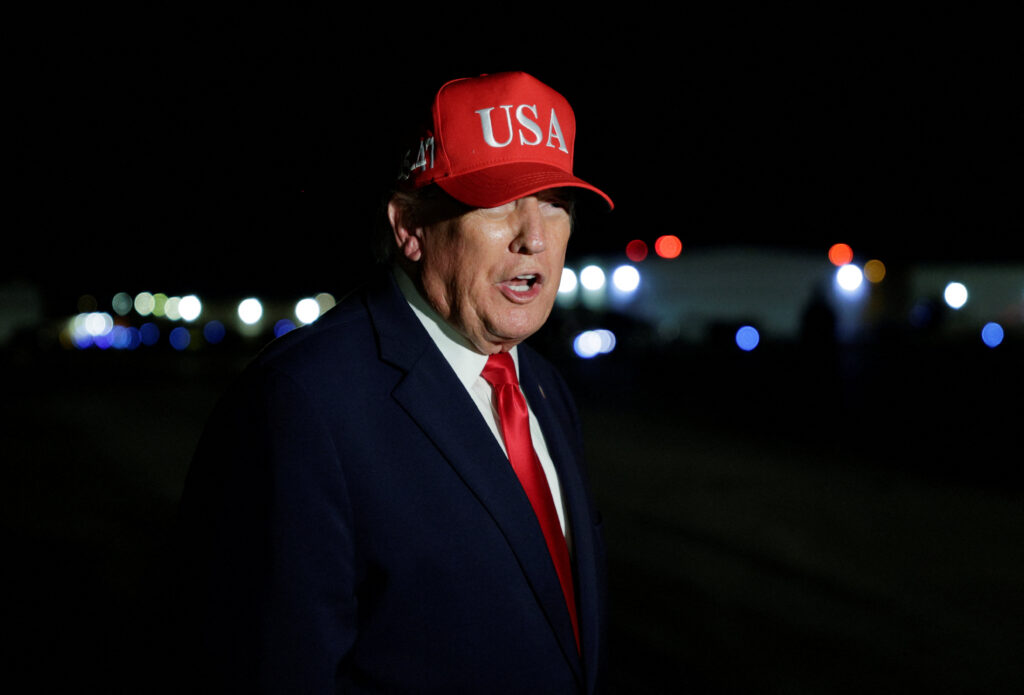
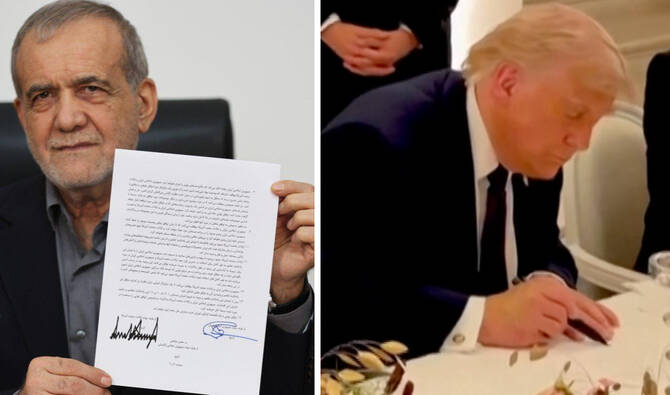
Video released by French President Emmanuel Macron showed Trump signing the document late Wednesday at the Palace of Versailles. Speaking to reporters afterward, Trump confirmed the agreement had been finalized.
“It’s signed. Signed in Versailles. Just signed it,” he said.
Iranian state media later published images of Pezeshkian holding a signed copy of the memorandum. In a message posted on X, the Iranian president described the agreement as a “historic document” and a signal that peace could be achieved through mutual respect.
“The Islamic Republic of Iran has always been committed to global peace while preserving its dignity and independence, as well as to progress and regional cooperation,” Pezeshkian wrote.
The memorandum, whose contents had remained unclear for several days, includes provisions for Iran to dilute portions of its enriched uranium stockpile in exchange for broad economic relief from the United States.
According to a U.S. official, an earlier version of the agreement was digitally signed on Sunday by Vice President JD Vance and Iranian Parliament Speaker Mohammad Bagher Ghalibaf, with Trump serving as a witness. Officials have not yet clarified how Wednesday’s signing differs from that earlier process.
Vance is expected to travel to Switzerland on Friday for the next phase of negotiations. The Swiss government said representatives from both countries will meet there to begin talks on a comprehensive peace accord, launching a 60-day negotiation period focused on unresolved issues surrounding Iran’s nuclear program.
Trump warned that military action could resume if Iran fails to uphold its commitments under the agreement.
Key Provisions of the Memorandum
Under the 14-point framework, the United States is expected to ease sanctions on Iran, release frozen Iranian funds and assets, and permit Tehran to resume unrestricted oil exports.
The agreement also calls for the “immediate and permanent termination of military operations” linked to the U.S.-Israeli conflict with Iran, which began on February 28 and triggered months of regional instability and economic uncertainty.
Both sides have committed to negotiating a broader final settlement within 60 days, with the option to extend talks by mutual agreement.
A central component of the deal involves reopening the Strait of Hormuz, one of the world’s most important energy corridors. Iran has agreed to allow the safe passage of commercial vessels without fees for an initial 60-day period. Following that, discussions involving Oman are expected to determine the future administration and management of the waterway.
Before the conflict, roughly 20 percent of the world’s oil shipments passed through the Strait of Hormuz, making its reopening a significant development for global energy markets and international trade.