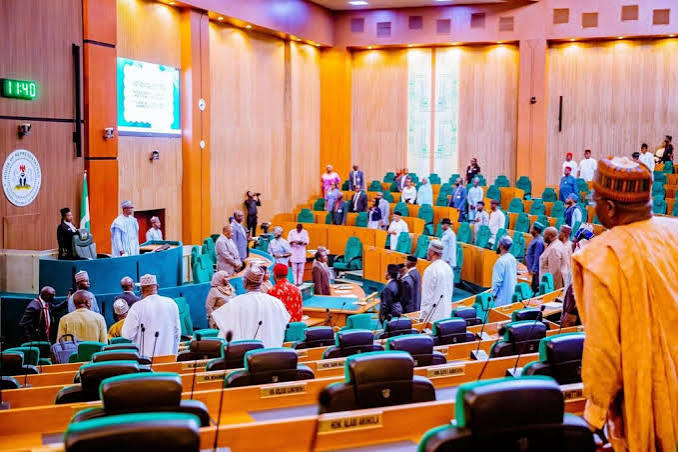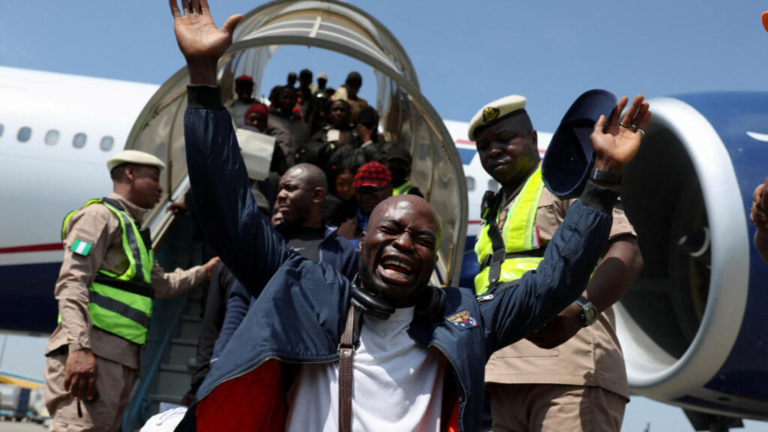
The Federal Government has indicated that Nigeria may consider stronger measures against South Africa if the continued harassment of its citizens persists, with the National Assembly expected to play a key role in determining any future response.
Minister of Foreign Affairs, Bianca Odumegwu-Ojukwu, said the government is currently engaging South African authorities through diplomatic channels but noted that lawmakers have a constitutional responsibility in shaping Nigeria’s next course of action should the situation worsen.
Speaking during a television interview, the minister reaffirmed the government’s commitment to the safety and welfare of Nigerians abroad amid recurring reports of harassment, forced evictions, looting, and intimidation of migrants in South Africa.
“The lawmakers have a role to play in this,” she said.
Odumegwu-Ojukwu expressed concern over the plight of many affected Nigerians who have spent years in South Africa, with some married to South Africans and raising children who have known no other home.
She pointed out that despite the presence of more than 120 South African companies operating in Nigeria, including major brands such as MTN, MultiChoice, Stanbic and Protea, Nigerian authorities have not subjected South African nationals or businesses to similar treatment.
“Nobody is asking them to provide proof of identity. Nobody is asking South African staff working there whether they are South Africans or Nigerians, and nobody is taking over their shops or businesses,” she said.
According to the minister, the attacks are harming South Africa’s international reputation and undermining the Pan-African ideals championed by Nelson Mandela.
She argued that the activities of anti-migrant groups have damaged the country’s image, resulting in cancelled events and increasing perceptions of South Africa as an unfriendly destination for African migrants.
Odumegwu-Ojukwu also faulted what she described as an inadequate response from South African authorities, alleging that police and security agencies have done little to halt the attacks or guarantee the safety of foreign nationals.
Meanwhile, the minister disclosed that Nigeria is finalising arrangements for the transfer of 98 Nigerians currently serving prison terms in Ethiopia under a bilateral agreement between both countries.
She said the inmates, who come from different parts of Nigeria, would be returned home to complete their sentences, stressing that criminal conduct should not be viewed through ethnic or regional considerations.
The minister reaffirmed the Federal Government’s commitment to protecting Nigerians abroad while continuing diplomatic efforts to address growing concerns over xenophobic attacks in South Africa.