The United States and Iran exchanged fresh military strikes on Friday, further testing a fragile ceasefire as Washington intensifies efforts to secure an agreement aimed at ending the conflict.
According to the U.S. Central Command, American forces intercepted a series of Iranian ballistic missiles and drones launched toward Gulf allies and key shipping routes in the region before carrying out retaliatory strikes against Iranian military infrastructure.
U.S. Central Command said Iran launched seven ballistic missiles toward Kuwait and Bahrain on Friday evening. Six of the missiles were intercepted by U.S. defenses, while a seventh failed to reach its intended target.
Military officials reported no casualties among American personnel.
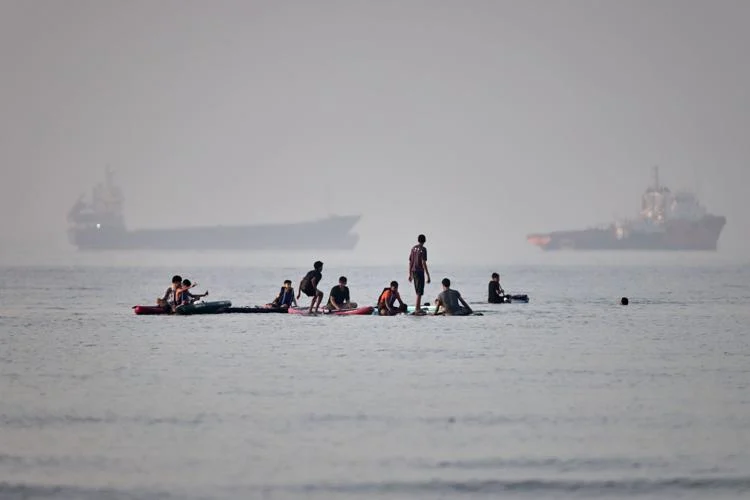
Earlier in the day, U.S. forces had shot down four Iranian drones heading toward the Strait of Hormuz, one of the world’s most important maritime corridors for oil and natural gas exports.
“The attack drones posed an immediate threat to regional maritime traffic,” Central Command said in a statement.
Kuwait’s military confirmed that its air defense systems were actively intercepting incoming missiles and drones, while authorities in Bahrain activated air raid sirens and instructed residents to seek shelter and follow emergency guidance.
Iran’s Islamic Revolutionary Guard Corps said it had targeted the Ali Al Salem Air Base in Kuwait, which hosts U.S. military personnel, as well as facilities associated with the U.S. Navy’s Fifth Fleet in Bahrain, according to reports carried by Iranian state media.
The latest confrontation comes amid continued tensions surrounding the Strait of Hormuz. The United States has maintained a blockade of Iranian ports in response to Tehran’s restrictions on maritime traffic through the strategic waterway, a move that has disrupted global energy markets and contributed to higher oil and gas prices.
In response to Friday’s attacks, U.S. forces struck several Iranian coastal surveillance radar installations, including facilities located on an island within the Strait of Hormuz.
Central Command said the strikes were conducted to prevent additional attacks and protect regional shipping lanes and allied forces.
The exchange marks the latest escalation in a series of tit-for-tat military actions that have complicated efforts to preserve and extend the ceasefire.
Earlier this week, Iranian drone attacks reportedly caused significant damage to a passenger terminal at Kuwait’s main international airport, killing one person, injuring dozens and temporarily disrupting operations.
Despite the renewed violence, President Donald Trump sought to project confidence that diplomatic efforts remain on track.
Speaking at an event in Wisconsin on Friday, Trump said developments involving Iran were progressing positively.
“The situation with Iran seems to be going quite well,” he told reporters.
Trump added that he expects a resolution to emerge soon, whether through a negotiated agreement or a more forceful approach.
“We’re going to come out of Iran very quickly, and it’s going to be very strong one way or the other,” he said. “Whether it’s a piece of paper or the very tough way.”
The latest military exchange highlights the continuing uncertainty surrounding the ceasefire and the broader effort to prevent a renewed escalation of conflict across the Gulf region.