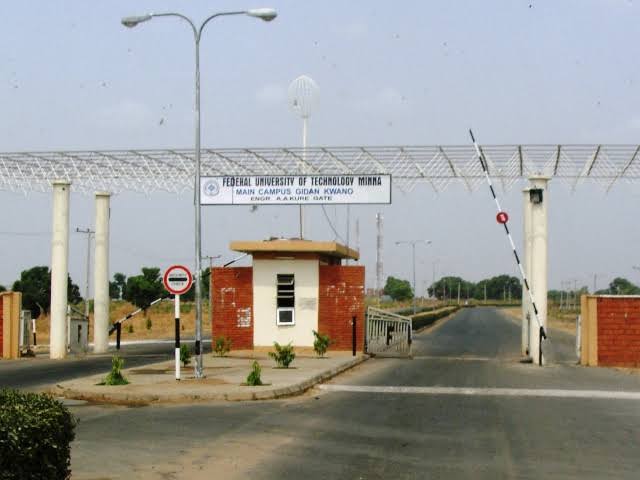
The Artificial Intelligence for Clean Energy (AI4CE) says it has concluded arrangements to train 50 students from the Federal University of Technology, Minna (FUT, Minna)
and Ibrahim Badamasi Babangida University, Lapai (IBBUL), on an industry immersion program, coined as ‘Acadoprenuership’ concept, which represents a major component of the research group.
AI4CE is a flagship project won by the Advanced Engineering Innovation Research Group of the FUT, Minna, with funding from the Royal Academy of Engineering, United Kingdom.
The training, according to AI4CE, commenced on April 16, 2021, at the AI4CE secretariat, CODeL Building, Main Campus, Gidan Kwano, Minna.
The one-month orientation exercise aims to equip the students with pre-requisite knowledge and skills that are needed in the 21st century and to acquaint them better with the demands of the industry before embarking on the six-month mandatory industrial attachment scheme.
In an interactive session with the newsmen on Tuesday in Minna, team leader, AI4CE, Professor Abiodun Musa Aibinu, explained that the one-month training was to prepare the students on what was expected of them in the industry, in terms of office ethics, use of equipment and communication skills.
He stressed that the training becomes necessary because the students were going to the industry as ambassadors and there was a need for them to project the good image of their institutions.
Professor Aibinu disclosed further than 28 students were selected out of 129 who applied for an industrial placement, noting that the students would be sent to their industry partners to undergo a six-month IT program.
He revealed that the training would also involve sessions on how to use hi-tech tools to carry out the assigned duties during the IT program, even as he said that equipment worth millions of naira have been procured to aid the training process.
The team leader further disclosed that academic and industry experts would also be on the ground to share their wealth of experience with the students during the training.
Furthermore, he expressed optimism that the training would help in bridging the gap between the industry and academia in Nigeria; create jobs, improve the workforce, provide industry-ready graduates, increase Internally Generated Revenue (IGR) for universities, and more revenue for government through taxation.
Professor Aibinu also stated that the collaboration with the industries has yielded a lot of benefits to the research group in terms of availability of funds for research, as well as commercialization of research prototypes.
He disclosed that the research group recently won a seed grant from Innovative Advantage Limited, Lagos, to solve the company’s research problems, with an option for the commercialization of the research prototype when completed.
The one-month-long training was divided into four modules namely: general knowledge, basic technical skills, soft skills development, and knowledge development, with speakers drawn from different fields.
Some of the key papers to be presented and speakers at the training include: Acadoprenuership: Championing the Realisation of Industry-Fitted Graduates in Nigeria to be delivered by Professor Abiodun Musa Aibinu; the 4th Industrial Revolution to be delivered by Dr. Caroline Alenoghena; Effective Communication and Presentation Skills by Sadiat Adetoro Salau while Mr. Jibril Bala will be speaking on Industry 4.0: Contemporary Trends and Prospective Applications
Others are: Connecting to the World of Clean Energy and its Prospects to be delivered by Dr. Lanre J. Olatomiwa while Mr. Abimbola Ajagun’s paper will focus on Module 2: Certification Course on Clean Energy, among others.
Meanwhile, a total of 30 students have been shortlisted for the first phase of the training, while the remaining 20 students will participate in the second phase of the training.
This program was supported by the Royal Academy of Engineering UK grant under the Higher Education Partnerships in Sub-Saharan Africa (HEP-SSA) program, with project ID HEPSSA1921/3/88.
Ada Peter