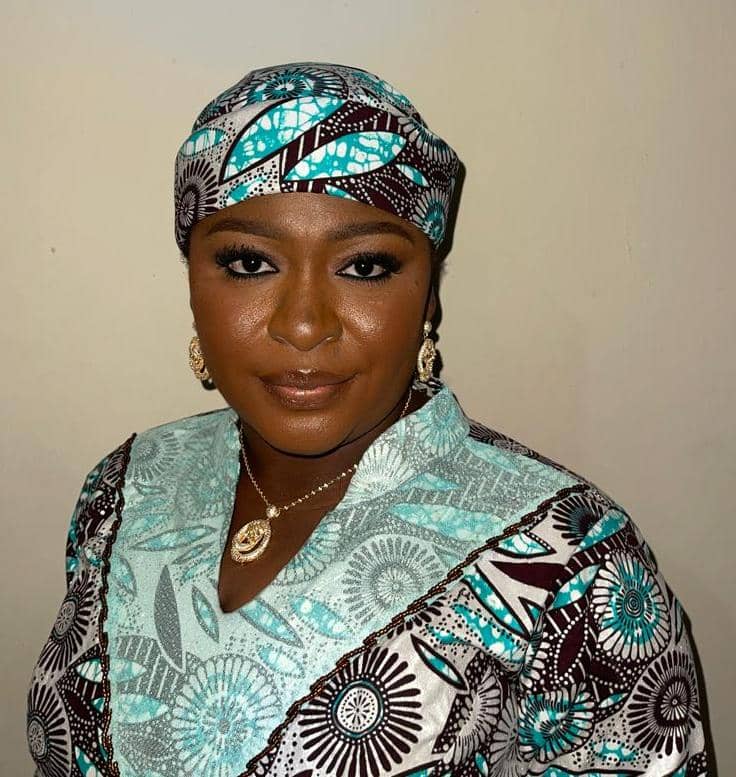
Former Minister of Finance, Mrs Kemi Adeosun, has given her most extensive account yet of the circumstances surrounding her resignation from President Muhammadu Buhari’s cabinet in September 2018, insisting that the decision was driven by principle rather than guilt.
Adeosun said she stepped down to protect the integrity of the Office of the Minister of Finance and to allow her pursue legal action to clear her name over the controversy surrounding her National Youth Service Corps (NYSC) exemption.
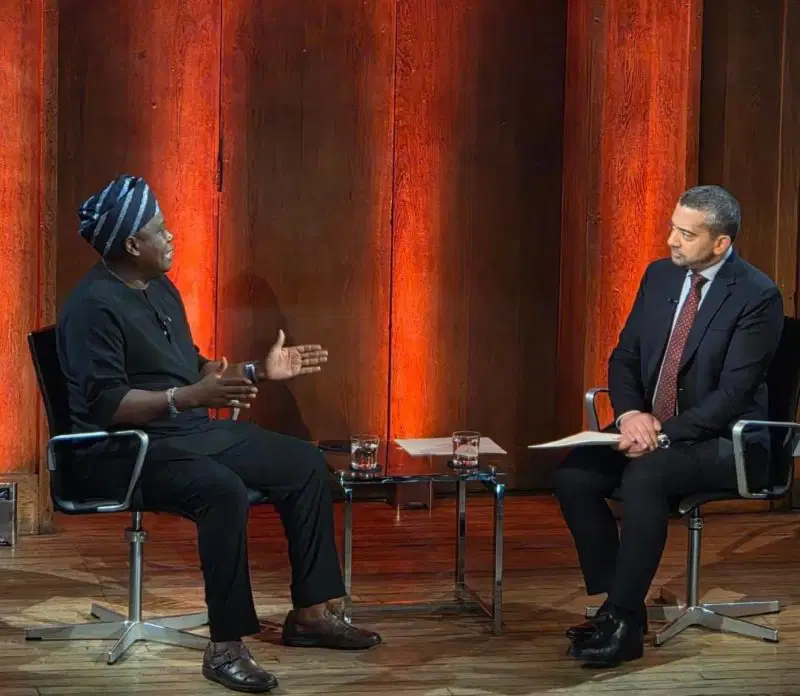
She spoke on Friday during an appearance on Channels Television’s Inside Sources with Laolu Akande, where she reflected on the political fallout from the episode and the personal considerations that informed her decision.
According to her, remaining in office while taking the government to court would have created a fundamental conflict. “People kept asking why did I resign? That no one resigns as minister of finance as I did,” she said. “I still think it was the right thing for me to do.”
Adeosun stressed that her resignation was not an admission of wrongdoing. “My resignation is a matter of principle and not an admission of wrongdoing. It was a step to protect the Office of the Minister of Finance and defend my reputation,” she said, explaining that she could not continue to represent Nigeria at local and international engagements while facing court proceedings over issues of integrity.
She added that initiating legal action against the government while serving as a senior cabinet member was inappropriate. “I knew I would need to go to court to clear my name, and doing so was not compatible with being Minister of Finance representing Nigeria at the highest level,” she said.
The former minister revealed that she personally informed President Buhari of her decision to resign. “I went to see Mr President, and I said, ‘Mr. President, I need to go. I need to go to court because I have to clear my name,’” she recounted, noting that the President supported her choice. “These names are leased from our children and our grandchildren. You don’t destroy your name because you want to stay as minister,” she said.
In July 2021, the Federal High Court in Abuja ruled that Adeosun was ineligible to participate in the NYSC scheme. Justice Taiwo Taiwo held that under the 1979 Constitution, which was in force when she graduated, she was not a Nigerian citizen at the time of graduation or when she turned 30, the statutory age limit for the scheme.
Adeosun graduated from the University of East London in 1989 at the age of 22. The court ruled that her appointment as Minister of Finance was neither illegal nor unconstitutional and that she was not required to present an NYSC certificate or any academic certificate as a condition for her appointment.
The suit, filed in March 2021 by the law firm of Chief Wole Olanipekun (SAN) on her behalf, also addressed her citizenship status. The court held that since the 1979 Constitution did not recognise dual citizenship, Adeosun was not eligible for NYSC at the time, and by the time the law permitted her citizenship status to revert, she was already above the age limit.
Beyond the legal controversy, Adeosun reflected on key policy debates during her tenure, including fuel subsidy removal and tax reforms. She said the unsustainability of fuel subsidy was widely recognised within government. “There was no minister who did not know that subsidy was killing us,” she said, citing distorted consumption figures driven by subsidised prices and porous borders.
She argued that subsidy payments drained resources from critical sectors. “Money spent on subsidy is money you can spend on roads, education or health,” she said, stressing the need for structural solutions rather than short-term palliatives.
On taxation, Adeosun said resistance is inherent to the role of a finance minister. “When you’re Minister of Finance, the word ‘no’ becomes your watchword,” she said. “If your finance minister is loved by everybody, they’re probably not doing much of a job.”
She defended initiatives such as the Voluntary Assets and Income Declaration Scheme and praised efforts to harmonise government data systems. “We’ve had TIN, NIN, BVN—too many numbers. Once you harmonise data, it becomes very difficult to hide,” she said, adding that technology and artificial intelligence now make it easier to track tax defaulters.
Adeosun also spoke on insecurity, recounting a traumatic experience during her tenure when her home was invaded and she was robbed at knifepoint. “It was extremely scary. I never slept in that house again,” she said, while expressing cautious optimism that there is now stronger resolve to address the problem.
Since leaving office, Adeosun has focused on social impact through DashMe Stores, a charity initiative she founded in 2021. She disclosed that the organisation has raised over ₦500m to support vulnerable people and orphanages nationwide.
DashMe currently operates one outlet in Abuja and three in Lagos, with a fifth set to open in Abeokuta next month. Expansion plans also include Ibadan, Port Harcourt, Kano and the Federal Capital Territory.
According to her, the initiative runs strictly as a not-for-profit venture. “Cumulatively, we’ve raised over ₦500m from our stores and partnerships, and that is exactly how much has gone out,” she said. “I don’t get paid. The only people who are paid are the shop staff.”
She revealed that the organisation has built about four orphanages, refurbished others and taken over abandoned projects, including one left unfinished for more than 40 years. Despite challenges such as vandalism of an orphanage under construction, she said the work would continue.
On poverty, Adeosun described the problem as global and said progress should be measured by social mobility rather than absolute figures. “What matters is whether people are able to move from poverty into the middle or lower-middle class,” she said, identifying education and enterprise as the fastest pathways out of deprivation.
She concluded by emphasising the role of citizens in driving change. “Government never starts anything. People start, and the government takes it over,” she said, adding that Nigeria’s challenge lies in expecting government to lead rather than citizens taking initiative.