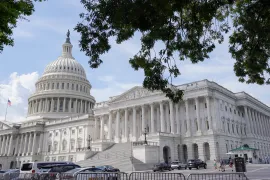
The federal government officially entered a shutdown Wednesday night after President Donald Trump and congressional leaders failed to reach a last-minute budget agreement, triggering widespread furloughs and program suspensions across the country.
Roughly 750,000 federal workers are expected to be furloughed, with the Trump administration warning some may be permanently terminated. Key federal agencies, including those overseeing education, environmental protection, and public health, are now bracing for severe operational disruptions. At the same time, Trump’s immigration enforcement and deportation agenda is expected to proceed uninterrupted.
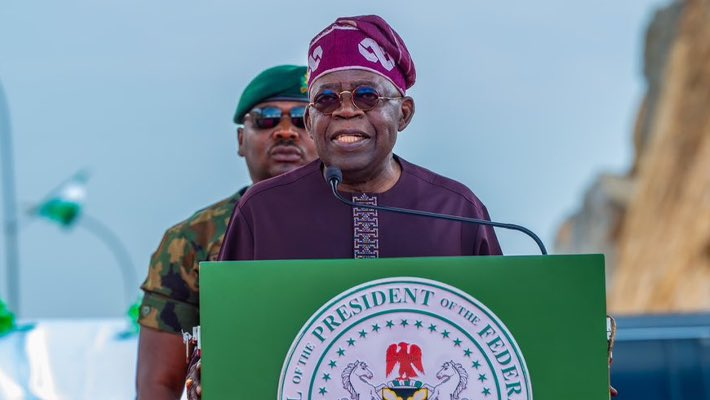
“We don’t want it to shut down,” Trump said earlier at the White House, mere hours before the midnight deadline.
Still, he warned of “irreversible” actions as part of what he described as retribution for opposition to his second-term policies.
A Record of Gridlock
This marks the third federal shutdown under Trump’s leadership—and the first since his return to office earlier this year—highlighting the entrenched political divisions over budget priorities. Unlike previous shutdowns, this one has unfolded without a clear path to resolution, raising fears of a prolonged government freeze.
While Democrats demand emergency funding to extend expiring health care subsidies under the Affordable Care Act, Republicans have refused to engage, encouraging Trump to avoid negotiations altogether. The president fueled tensions further this week by sharing a mocking video of Democratic leaders, widely condemned as inflammatory and unserious.
“This is not a drill,” said Rachel Snyderman, former White House budget official and now managing director of economic policy at the Bipartisan Policy Center.
“Shutdowns only inflict economic cost, fear, and confusion across the country.”
Economic Risks Grow Amid Uncertainty
While markets have weathered past shutdowns with relative calm, analysts warn this episode could be more damaging, especially given the absence of active negotiations or viable compromise. According to Goldman Sachs, there are “few good analogies” for this week’s shutdown scenario.
Among the most immediate concerns: the release of Friday’s monthly jobs report is now uncertain, and benefits payments, work contracts, and public services are likely to see interruptions within days.
Trump’s Office of Management and Budget, led by Russ Vought, has instructed federal agencies not only to initiate standard furloughs but also to prepare for mass firings, as part of the administration’s plan to permanently shrink the federal workforce.
What Will Stay Open—and What Won’t
- Medicare and Medicaid will continue operating, though delays are expected due to reduced staffing.
- The Pentagon will remain functional, as will essential operations at the Department of Homeland Security.
- Numerous offices across education, environment, and labor departments are expected to close temporarily or operate at minimal capacity.
With no offramp in sight and both parties entrenched in partisan standoffs, the shutdown threatens to further erode trust in government institutions while exacerbating economic uncertainty for millions of Americans.