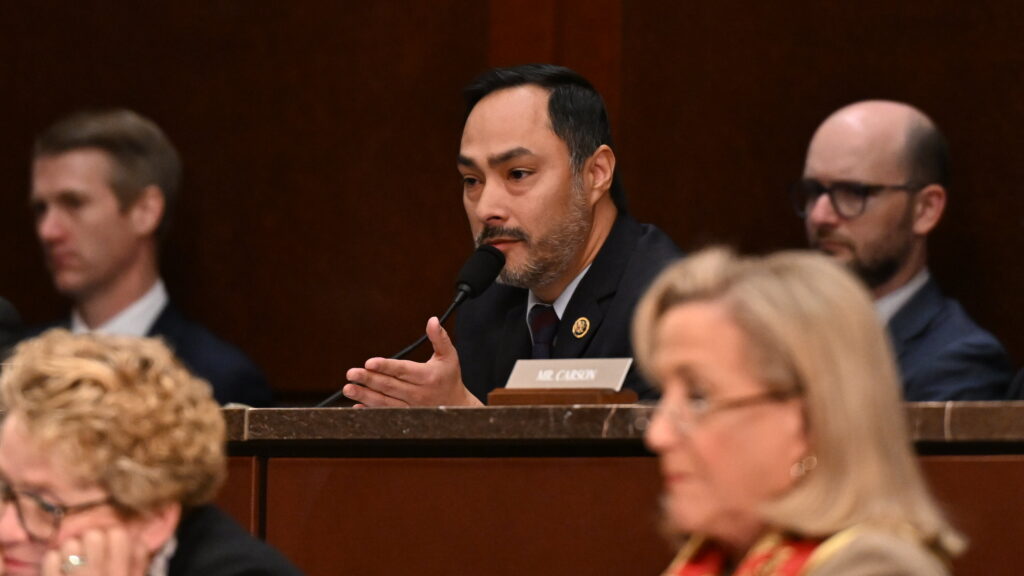
A federal vaccine advisory committee voted Friday to end the decades-old recommendation that all newborns in the United States receive the hepatitis B vaccine on the day they are born — a move that immediately drew strong condemnation from medical and public health experts.
The committee’s current members were all appointed by U.S. Health Secretary Robert F. Kennedy Jr., a longtime anti-vaccine activist before becoming the nation’s top health official earlier this year.
“This is the group that can’t shoot straight,” said Dr. William Schaffner, a leading vaccine expert at Vanderbilt University who has worked with the Advisory Committee on Immunization Practices (ACIP) and its workgroups for decades.
For more than 30 years, federal health agencies have recommended that all infants receive a birth-dose hepatitis B shot, a policy credited with preventing thousands of infections and considered one of the country’s major public health success stories.
But Kennedy’s ACIP voted to narrow the guidance, recommending the birth-dose only for newborns whose mothers test positive for hepatitis B — or whose mothers were not tested at all. For all other infants, the decision will now fall to parents and pediatricians. If families decline the birth-dose, the committee advised beginning the vaccine series at 2 months of age.
The acting head of the Centers for Disease Control and Prevention, Jim O’Neill, must now decide whether to formally adopt the committee’s recommendation.
If accepted, the shift would mark a return to a public health approach the U.S. abandoned more than three decades ago in favor of universal infant vaccination.
Asked why the newly appointed panel fast-tracked the review, committee member Vicky Pebsworth said Thursday that there was “pressure from stakeholder groups wanting the policy to be revisited.” She did not identify those groups, and a spokesperson for Kennedy did not respond to questions about who influenced the process.
Committee members argued that the risk of hepatitis B infection for most newborns is low and suggested that earlier research supporting birth-dose safety was insufficient — a claim many experts strongly dispute.