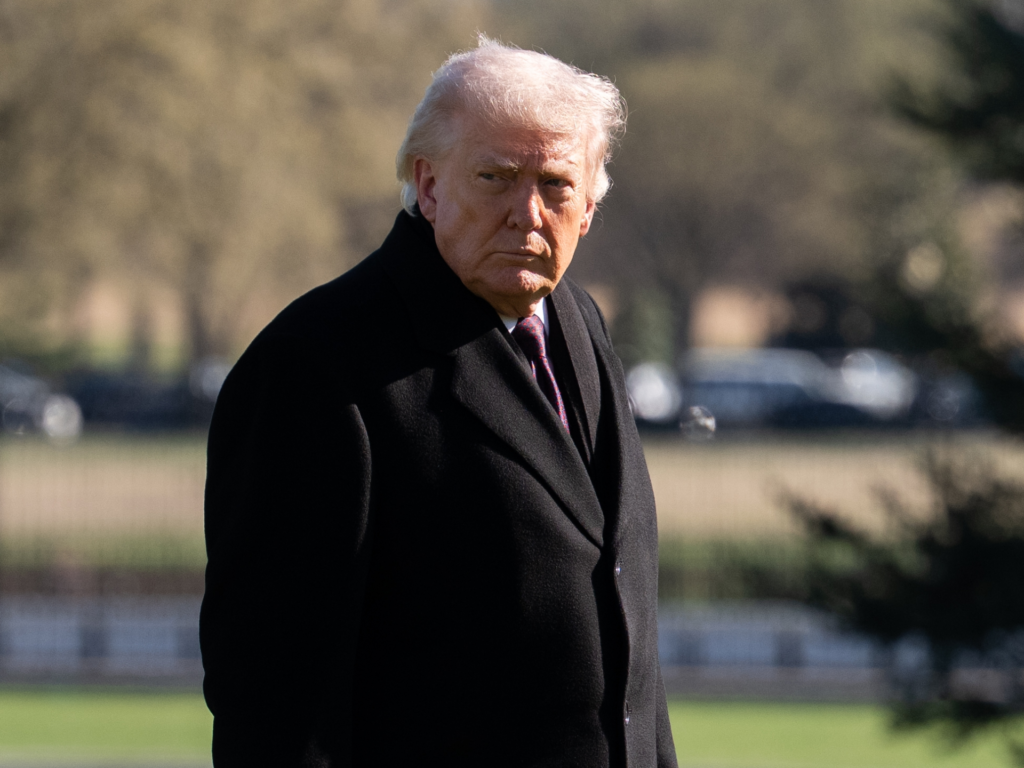
The Trump administration has frozen $26 billion in federal funding designated for Democratic-led states, escalating tensions as the government shutdown drags into another day without a resolution.
The move targets $18 billion set aside for transit projects in New York—home to Senate Majority Leader Chuck Schumer and House Minority Leader Hakeem Jeffries—and another $8 billion earmarked for green-energy programs across 16 Democratic-controlled states, including California and Illinois.
The decision signals President Donald Trump’s intent to use the shutdown as leverage in his ongoing battle with Democratic lawmakers. In a post on Truth Social, Trump doubled down: “Billions of dollars can be saved.” Vice President JD Vance echoed that sentiment, warning that prolonged gridlock could lead to an expansion of mass federal layoffs, adding to the 300,000 workers already projected to lose their jobs by year’s end.
Now in its latest phase, the 15th government shutdown since 1981 has sidelined 750,000 federal workers—either furloughed or working without pay. Core services have ground to a halt, including environmental programs and scientific research. Even national cemeteries are being affected, with the Department of Veterans Affairs announcing that while burials will continue, headstones and maintenance are on hold.
Democrats accused Trump of weaponizing the shutdown for political retribution. “He’s using the American people as pawns,” Schumer said in a floor speech, adding that the freeze threatens thousands of jobs tied to critical infrastructure efforts. Jeffries warned that halting funds for New York transit would deal a severe blow to the state’s economy.
Some Republicans have also voiced unease. Senator Thom Tillis cautioned that pulling infrastructure support “creates a toxic environment” for bipartisan negotiations. But Senate Minority Leader John Thune took a harder line, insisting, “Vote to open up the government and that issue goes away.”
Attempts to resolve the standoff in the Senate have faltered. Competing proposals—a Republican-backed stopgap measure to fund operations through November 21 and a Democratic plan tied to expanded health benefits—both failed to secure enough votes. With a 53–47 majority, Senate Republicans would need support from at least seven Democrats to meet the 60-vote threshold required to pass spending bills.
At the heart of the standoff is the $1.7 trillion needed to fund discretionary government programs, which represent roughly one-quarter of total annual federal spending. The rest is committed to mandatory outlays such as Medicare, Social Security, and interest on the now $37.5 trillion national debt.
Democrats are demanding legislative guardrails to prevent Trump from bypassing funding laws after they’re signed—something they allege he has done in the past. Republicans counter that Democrats are obstructing the reopening of government in an effort to score political points ahead of the 2026 midterm elections.
The impasse draws strong comparisons to the record 35-day shutdown during Trump’s first term in 2018–2019, which ended only after mounting public pressure over service disruptions—particularly in air travel. As that experience showed, analysts suggest the current deadlock may not be resolved until tangible consequences prompt broader public outcry.
For now, both parties remain entrenched—staking political futures on who the public ultimately blames for the deepening dysfunction in Washington.