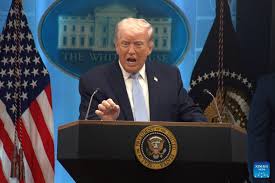
Former President Donald Trump has reignited his feud with Federal Reserve Chair Jerome Powell, calling for his immediate resignation in a blistering post on his Truth Social platform Wednesday.
“‘Too Late’ should resign immediately!!!” Trump declared, referencing a news article that claimed Powell may soon face a congressional investigation into renovations at the Federal Reserve’s Washington headquarters.
The attack marks a sharp escalation in Trump’s long-standing criticism of Powell, whom he originally appointed during his first term in office. While past presidents have typically respected the Federal Reserve’s independence, Trump has repeatedly broken with that tradition, publicly pressuring Powell to cut interest rates and stimulate the economy.
Despite once asserting that he had “no intention of firing” Powell, Trump has continued to hammer the central bank over what he sees as overly cautious monetary policy. With inflation still a concern and interest rates historically high, Trump is urging the Fed to lower rates—a move he says is critical to boosting economic growth as he eyes another term in the White House.
In a rare response to political criticism, Powell appeared to push back this week during remarks at a central banking forum in Portugal. He suggested that the Fed’s ability to lower rates sooner was hindered by the inflationary effects of Trump-era trade policies.
“I think that’s right,” Powell said when asked if tariffs imposed under Trump had delayed rate cuts.
The Federal Reserve declined to comment on Trump’s latest statement.
Powell has consistently defended the Fed’s autonomy and has made clear that he would not step down, even under pressure from the White House. Citing a landmark 1935 Supreme Court ruling, Powell has said that Federal Reserve governors cannot be removed from office without cause, shielding them from political influence.
As Trump ramps up his campaign rhetoric and focuses on reshaping the nation’s economic direction, his renewed attacks on Powell signal a potential showdown over the future of US monetary policy—and the limits of presidential power over independent financial institutions.