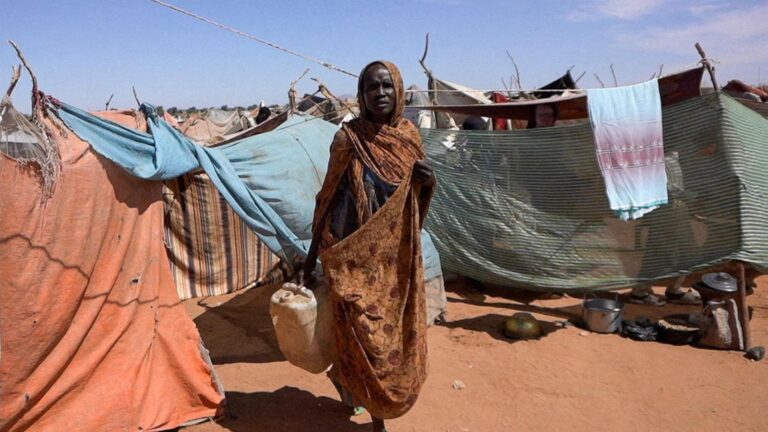
Dr. Mohammed Ibrahim Mohammed was among the last physicians remaining in El Fasher, a city in Sudan’s embattled Darfur region, before he was forced to flee as violence intensified.
“As I ran for my life, I passed dead and injured people, some of whom I knew personally,” Mohammed said. “I heard people crying out for help, but I couldn’t stop. It became about personal survival. As a doctor, it was my duty to help the wounded, yet I was unable to offer any help.”
El Fasher had been under siege for roughly 18 months by the Rapid Support Forces, a powerful paramilitary force that now controls about half of Sudan. Mohammed said food supplies were exhausted by the summer of 2025, leaving tens of thousands of civilians trapped in the city to survive on animal feed.
“Drones were everywhere,” he said. “RSF fighters attacked the city from four directions in massive numbers. They began killing civilians, destroying buildings and shelling indiscriminately. People were running in every direction. It looked like an apocalypse. Everyone was just trying to survive.”
With El Fasher effectively cut off from the outside world and humanitarian organizations blocked from entering, independent confirmation was limited. Still, signs of the violence were visible from space. Satellite imagery released in October by Yale University showed clusters of bodies, burning structures and pools of blood across parts of the city, underscoring the scale of the devastation.